


Four-Hand Thai Massage: What It Is & Where to Find It

Most travelers to Thailand have experienced a traditional Thai massage. A significant number have tried aromatherapy oil work or a herbal compress treatment. But four-hand Thai massage remains the treatment that most wellness visitors hear about, feel mildly curious about, and then never actually book. That is a mistake worth correcting. Two therapists working on you in perfect synchronization at the same time is not a gimmick or a marketing upsell. It produces a physiological state that a single-therapist session simply cannot replicate, and Thailand happens to be one of the best countries on earth in which to experience it. Here is everything you need to know before you book.
Table of Contents
What Is Four-Hand Thai Massage?
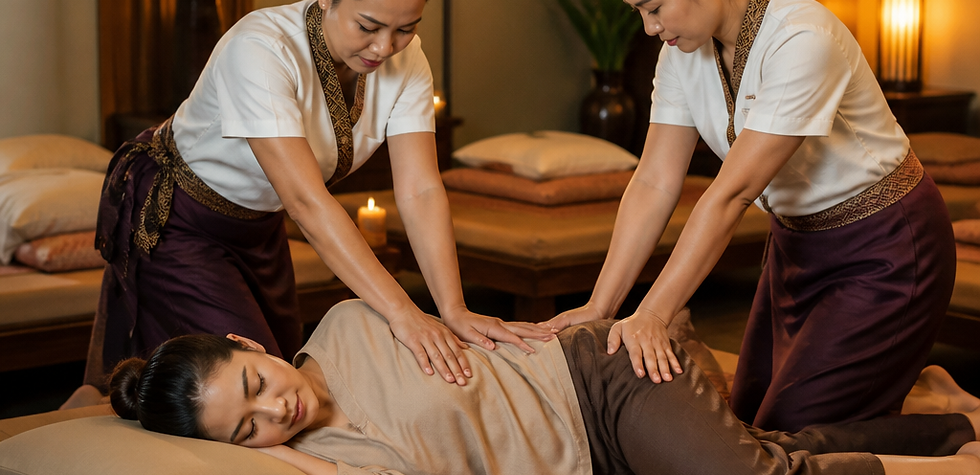
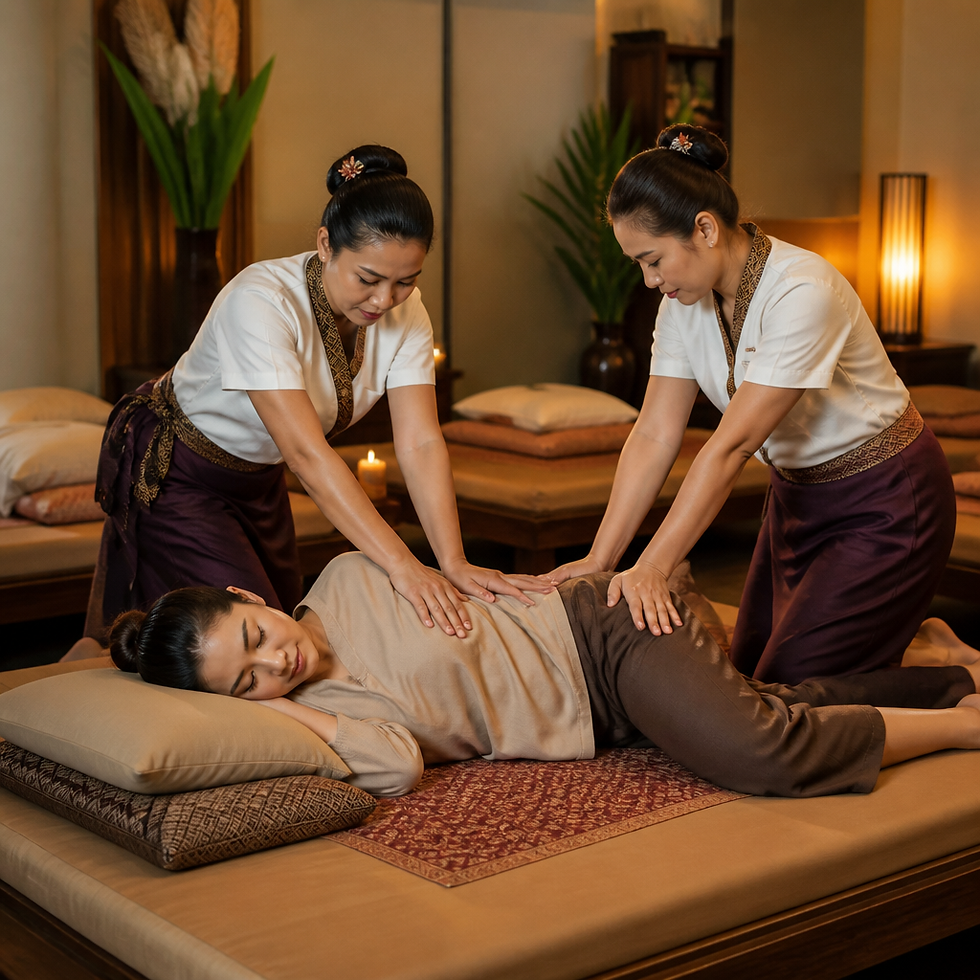
A four-hand Thai massage is a single treatment session delivered by two therapists working on your body at the same time. The defining characteristic is synchronization. The therapists do not simply share the task of massaging you. They coordinate their movements, pressure, and rhythm so that corresponding strokes land on both sides of your body at the same moment.
Think of it as a choreographed duet rather than two separate soloists. In practice, the therapists often mirror each other exactly: if one thumb presses into the left trapezius muscle, the other presses into the right simultaneously. They rehearse as a pair to make this seamless, not improvised.
The style of bodywork applied varies by spa. Some establishments use traditional Thai dry technique, with the therapists working on a floor mat while you remain clothed. Others offer four-hand oil massage on a treatment table, drawing on Thai and Swedish methods together. Many luxury Thai spas blend both approaches within the same session, opening with rhythmic oil strokes and closing with assisted stretches. The thread that runs through all versions is the synchronization of the two pairs of hands.
Quick Takeaways
Key Insight | Explanation |
|---|---|
Two therapists, one coordinated session | Both therapists work simultaneously in synchronized movements, not alternately. You are not getting two separate massages happening side by side. |
The relaxation effect is neurological, not just physical | Your brain cannot track two coordinated rhythms at once and essentially gives up trying, inducing a deep meditative state faster than a single-therapist session can. |
Coverage is roughly double in the same time | Sixty minutes of four-hand work covers approximately what two hours of single-therapist work covers. It is efficient as well as indulgent. |
Thailand is the best-value country to try it | Four-hand massage at quality Bangkok and Chiang Mai spas costs a fraction of equivalent treatments in Western cities, with no reduction in therapist skill or environment quality. |
Synchronization is the skill that matters most | Two capable therapists working without coordination produce a disorienting experience. Always book at a spa where therapists train as a paired team, not as individuals who are paired on the day. |
It is available in all major Thai destinations | Bangkok, Chiang Mai, Phuket, Pattaya, and Hua Hin all have reputable spas offering four-hand treatments. It is not restricted to five-star hotel properties. |
Price reflects quality tier, not a fixed standard | Prices for a 60-minute session range from around 850 baht at independent Phuket parlors to over 5,000 baht at luxury hotel spas in Bangkok. The difference in setting and therapist training is significant. |
Four-hand Thai massage sits at the intersection of ancient Thai healing wisdom and modern luxury spa culture. Understanding what makes it different from every other treatment on a spa menu helps you decide where it belongs in your Thailand wellness itinerary, and whether it deserves a priority booking or a spontaneous add-on.
How Four-Hand Thai Massage Actually Works
The mechanics of four-hand Thai massage are more interesting than the marketing language around it usually suggests. Understanding what is actually happening during the session changes how you experience it.
The Neurological Mechanism Behind Deep Relaxation
Your brain is a pattern-recognition machine. When a single therapist works on you, your nervous system tracks the movements, anticipates the next stroke, and stays partly alert. This background alertness is normal and is one reason why mental relaxation often lags behind physical relaxation in a standard massage.
With four hands moving in synchronized but bilateral patterns, your brain attempts to follow two coordinated rhythmic streams at once and cannot sustain that tracking. The result is that the anticipatory mental alertness drops away faster and more completely. You stop predicting what comes next and enter a deeper, more meditative state of relaxation than most single-therapist sessions achieve, often within the first fifteen minutes.
What the Therapists Are Actually Doing
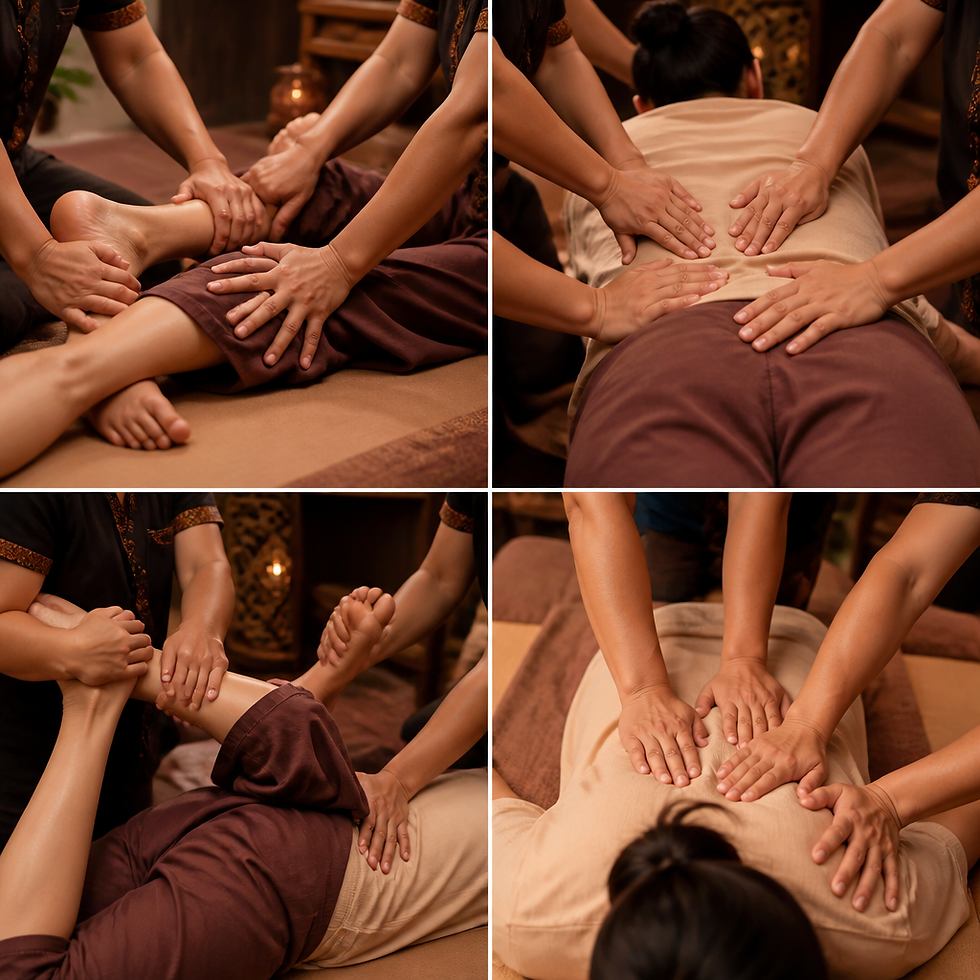
A well-executed four-hand Thai massage session is choreographed in advance. Reputable spas pair therapists who have trained together, not individuals who are introduced on the day of your appointment. The two therapists begin and end strokes in unison, match the depth of pressure on left and right sides, and transition between techniques as a unit.
The techniques applied typically include effleurage (long gliding strokes to warm the muscle tissue), petrissage (kneading and compression), friction work across the back and shoulders, and, in treatments that incorporate Thai dry technique, assisted stretches and acupressure along the body's sen lines. The precise blend depends on the spa and the style of treatment you book.
At certain points, the therapists' hands actually cross over and interweave, producing an enveloping sensation that is genuinely unlike anything achievable with two hands. This cross-hand work requires real rehearsal to feel fluid rather than awkward, and it is one of the markers that separates a practiced pair from an improvised one.
Pro tip: When calling to book, ask specifically whether the therapist pair trains together as a regular team. The honest answer to that question tells you more about the quality of the experience you will receive than any marketing description.
The Real Benefits (and What Gets Overstated)
Four-hand Thai massage delivers genuine physiological and psychological benefits. It also attracts some breathless marketing copy. Here is a direct account of what it actually does.
What the Treatment Reliably Delivers
Deep, fast relaxation is the primary and most consistent benefit. The dual stimulation triggers the parasympathetic nervous system, reducing the production of stress hormones and promoting a state of calm that most people describe as unusually complete. Many guests report falling into a light sleep within the first twenty minutes, which rarely happens in standard massage.
Circulatory improvements are also real. Two sets of hands working simultaneously across the whole body creates a more consistent rhythmic pressure that supports blood and lymphatic flow. Improved circulation helps tissue feel less congested, muscles recover from tension more completely, and the skin takes on a healthier quality after treatment.
Full-body coverage within a shorter session time is a practical benefit that is often undersold. An hour of four-hand work reaches roughly the same tissue area that a two-hour single-therapist session covers. For travelers with limited time who want a complete treatment, this makes a strong case for booking the four-hand option.
What Gets Exaggerated
Claims that four-hand massage "heals" specific musculoskeletal conditions or produces measurably superior outcomes compared to skilled single-therapist work on targeted areas are overreaching. If you have a specific injury or a structural problem in one area, a focused single-therapist session is often more therapeutically precise. Four-hand massage is not always the most clinical choice. It is, however, the most immersive relaxation experience that Thai spa culture offers.
The value of four-hand massage is not that it does twice as much work. It is that it brings the mind into the treatment in a way that single-therapist massage rarely can.
Four-Hand vs. Other Thai Massage Treatments: A Direct Comparison
Treatment Type | Key Characteristics | Best Suited For |
|---|---|---|
Four-Hand Thai Massage | Two synchronized therapists, full-body bilateral coverage, deep meditative relaxation, higher price point, oil or dry technique available | Travelers wanting maximum relaxation in limited time, special-occasion wellness experiences, those who find single sessions leave their mind restless |
Traditional Thai Massage (Nuad Bo Rarn) | One therapist, no oil, clothed, floor mat, acupressure and assisted stretching along sen lines, energizing as well as relaxing | Muscle tightness and joint stiffness, those wanting an authentic cultural healing experience, budget-conscious travelers who still want quality |
Thai Aromatherapy Oil Massage | One therapist, aromatic oils, treatment table, slower and more flowing technique, emphasis on skin and soft tissue | Guests who prefer lighter pressure, travelers with sensitive or dry skin, those combining massage with other spa treatments in a package |
The comparison above is not about which treatment is superior overall. Each has a genuine use case. The practical decision for most Thailand visitors comes down to this: if you want deep relaxation and have the budget, four-hand massage delivers it faster and more completely than either alternative. If you want a therapeutic stretch and energy reset, traditional Thai massage has no equal. If you want gentle, nourishing body work that feels quietly luxurious without the intensity of two therapists, aromatherapy oil massage is the right call.

Where to Find Four-Hand Thai Massage in Thailand
Four-hand Thai massage is available across all of Thailand's major wellness destinations, but the quality, setting, and price vary considerably. Here is a city-by-city guide to what you should expect to find and where to look.
Bangkok
Bangkok has the widest range of four-hand massage options in the country, from in-room mobile services to hotel spas charging five-star prices. The luxury hotel spa tier, including properties along the Chao Phraya and in the Sukhumvit corridor, offers the most polished experiences, with trained therapist pairs, premium oils, and carefully designed treatment rooms. Spa Cenvaree and the spa at Mandarin Oriental are among the most frequently cited options at that level, with four-hand sessions starting at higher price points that reflect the environment and the quality of therapist pairing.
Mid-range spas in Bangkok's Thonglor, Ari, and Silom areas also offer legitimate four-hand treatments at considerably lower prices, typically in the 2,000 to 3,500 baht range for sixty minutes. The key is to verify that therapists at these spas train as pairs, not as individuals who are assigned on the day.
Chiang Mai
Chiang Mai's spa scene punches well above its size. Oasis Spa, which has operated in Chiang Mai for many years and expanded to Bangkok, Pattaya, and Phuket, offers a signature four-hand treatment that combines synchronized oil work with elements drawn from Lanna healing traditions. The northern city's slower pace makes it an especially good destination for four-hand massage, because guests typically have more time to rest after the session rather than heading straight back into the streets.
Phuket
Phuket's four-hand massage options range from beach-adjacent boutique spas near Karon Beach to resort spa facilities in the hills above Patong. Let's Relax Spa has a presence in Phuket with a specific four-hand Thai massage offering, and pricing at Phuket spas tends to sit between Bangkok's mid-range and its luxury hotel tier. For travelers staying in Phuket for more than a couple of days, combining a four-hand session with other spa treatments as a package is worth exploring.
Pattaya and Hua Hin
Both destinations have reputable spas offering four-hand treatments, though the overall density of high-quality options is lower than in Bangkok or Chiang Mai. Pattaya's spa scene skews more varied in quality, so advance research matters more here than in other cities. Hua Hin, with its quieter atmosphere and strong domestic Thai wellness tourism culture, tends to have well-run mid-range spa options that are less known to international visitors but reliable in quality.
Pro tip: In every Thai city, the best way to find a spa that does four-hand massage properly is to check whether they mention therapist pairing and coordination in their treatment description. Spas that describe the treatment as simply "two therapists working at once" without any reference to synchronization or choreography are often improvising on the day. That produces a very different experience.
What to Expect During Your Session
First-timers to four-hand massage sometimes feel uncertain about the practicalities. Here is a clear, honest account of how a well-run session unfolds.
Before the Session Begins
You will have a brief consultation, typically five to ten minutes. Both therapists will be present and will ask about any areas of tension, injury, or sensitivity, and about your pressure preferences. This is also the moment to specify whether you want the session to focus on particular areas or whether you prefer full-body coverage. Be honest about injuries: with four hands working simultaneously, any asymmetry in the treatment (avoiding one shoulder, for instance) requires extra coordination from the therapists.
The First Fifteen Minutes
Most sessions open with synchronized long strokes across the back, shoulders, and legs to warm the tissue and establish the rhythm. This is where many guests first notice the unusual quality of the treatment. Your brain tries to track both pairs of hands and finds it cannot. The mental shift that follows, sometimes described as the mind "switching off," typically happens in this opening phase.
The Middle of the Session
The therapists move through deeper work: kneading of the shoulders and upper back, pressure along the spine and gluteal muscles, and detailed work on the calves and feet. In sessions that include Thai technique, assisted stretches may be introduced here, with both therapists working together to create gentle traction. The cross-hand movements, where the therapists' hands interweave, appear at intervals and produce the most distinctive sensation of the entire treatment.
Closing and Aftercare
Sessions typically close with slower, lighter strokes that gradually bring your nervous system back to a more alert state. You will be given time to rest on the table before sitting up. Do not rush this phase. The post-session calm is part of the therapeutic benefit, and four-hand massage leaves guests noticeably more deeply relaxed than standard treatments, so give yourself at least fifteen minutes before any activity after the session ends.
Pricing Guide: What It Costs Across Thailand
Four-hand Thai massage is priced at a premium over standard single-therapist treatments because you are paying for two trained therapists and the coordination overhead of a specialized shared session. The pricing structure across Thailand reflects this reality, but the range is wide.
At independent spas and boutique parlors in Phuket and Pattaya, a 60-minute four-hand session can be found for roughly 850 to 1,400 baht. These represent the most accessible entry point, though quality verification matters more at this tier. Mid-range spas in Bangkok and Chiang Mai, including established chain spas with a track record of therapist pairing, typically charge in the range of 2,000 to 3,500 baht for 60 minutes. Luxury hotel spas in Bangkok, where the environment, oils, and therapist training are at the highest level, price four-hand treatments from around 5,000 baht upward for 90 minutes, with some five-star hotel spas reaching considerably higher before taxes and service charges.
For context: even at Bangkok's hotel-spa prices, four-hand massage in Thailand costs a fraction of what an equivalent treatment would command in London, Sydney, or New York. The value calculation is genuinely favorable, which is part of why Thailand draws serious wellness travelers specifically for treatments like this one.
Pro tip: When comparing prices across spas, note whether the listed rate includes both therapists or whether you are expected to pay a per-therapist gratuity on top. At mid-range spas where tipping is standard, a session listed at 2,000 baht may effectively cost closer to 2,400 baht. Budget accordingly.
Booking Tips to Get the Most From Your Session
Booking a four-hand Thai massage is slightly different from booking a standard treatment, and the decisions you make at the booking stage materially affect the quality of the experience.
Book at least 24 hours in advance. Four-hand massage requires two therapists to be available simultaneously and trained together as a pair. Walk-in bookings are less likely to result in a well-coordinated pair, particularly at mid-range spas where staffing is tighter. Advance booking gives the spa time to schedule its trained therapist pairs appropriately.
Choose a session length that suits your goals honestly. A 60-minute session is genuinely complete for most people experiencing four-hand massage for the first time. The depth of relaxation achieved means that 90 or 120 minutes, while available and wonderful for experienced guests, can feel overwhelming on a first visit. Start with 60 minutes and extend on a repeat booking if you want more.
Communicate clearly about pressure preferences during the pre-session consultation. Four-hand pressure applied simultaneously to both sides of the body can feel more intense than the same pressure from a single therapist because there is no break or variation side to side. If you are unsure about your pressure tolerance, start lighter than you think you need and ask for more rather than starting heavy and finding it too much.
Avoid scheduling a four-hand massage immediately before anything requiring alertness or energy. The relaxation response from a well-delivered session is substantial. Plan for rest afterward, whether that means returning to your hotel room, sitting quietly in the spa's relaxation area, or taking a slow walk. Late afternoon or early evening sessions work best for most travelers, leaving the rest of the day for activity and the evening for the residual calm.
Frequently Asked Questions
Is four-hand Thai massage suitable for first-time massage recipients?
It depends on the person, but caution is reasonable. Four-hand massage is more intense in its sensory impact than a standard treatment, even at moderate pressure. If you have never had a professional massage before, a traditional Thai massage or a light aromatherapy oil session is a better starting point. Once you know your body's response to massage in general, four-hand treatment becomes an excellent next step rather than an introduction.
What should I wear during a four-hand Thai massage?
This depends on the style of treatment you book. If you book a four-hand Thai dry massage, you will be provided with loose comfortable clothing similar to what standard Thai massage requires. If you book a four-hand oil massage, you will undress to your comfort level and be professionally draped throughout the session. Ask the spa when you book which style they offer and what attire is appropriate, since practices vary.
How is the therapist coordination maintained throughout the session?
Reputable spas train therapist pairs together rather than pairing available staff on the day of a booking. The coordination comes from shared choreography, repeated rehearsal, and the ability of both therapists to read small cues from each other during the session. In well-trained pairs, this becomes second nature. In improvised pairs, the coordination gaps become noticeable as the session progresses. This is why training history matters when choosing where to book.
Can I request a four-hand massage with a specific combination of techniques?
At many established Thai spas, yes. Some spas offer a choice between four-hand traditional Thai, four-hand oil, or hybrid sessions that combine elements of both. Others have a fixed signature four-hand treatment that the therapist pair specializes in. Ask at the time of booking what customization is available. Requesting specific pressure levels, focus areas, or oil preferences is standard and appropriate regardless of the spa's format.
Is four-hand Thai massage appropriate during pregnancy?
No, not without medical clearance and a spa specifically trained in prenatal massage. Four-hand treatment involves simultaneous pressure across multiple areas of the body in ways that are not appropriate for pregnancy without specialist adaptation. If you are pregnant and interested in massage, ask spas specifically about their prenatal offerings rather than modifying a standard four-hand session.
How far in advance should I book a four-hand massage at a luxury hotel spa in Thailand?
For luxury hotel spas in Bangkok during high season, particularly from November through February, booking two to three days in advance is prudent. Popular spas with a limited number of trained therapist pairs fill their four-hand slots quickly because there are fewer available than for standard single-therapist treatments. Outside peak season, same-day advance booking of 24 hours is usually sufficient, but earlier is always safer for this particular treatment.
If you have experienced four-hand Thai massage in Thailand, whether at a luxury hotel spa or a boutique local parlor, we would genuinely like to hear which destination you were in and whether the therapist coordination lived up to what was promised.
References
Health Land Spa and Massage: Why a Four Hands Massage Is Beneficial to Your Mind and Body
Loft Thai Spa: How Synchronized Strokes and Holistic Healing Work in a Four Hands Session
Elysian Thai Spa Bangkok: Four Hands Massage Explained, Who It Is For, and How It Works
Oasis Spa Thailand: Signature Massage Treatments Including Four Hands Across Bangkok, Chiang Mai, Pattaya, and Phuket
Wonder Bangkok: Four Hands Massage Guide, Benefits, and What to Expect During Your Session


Comments