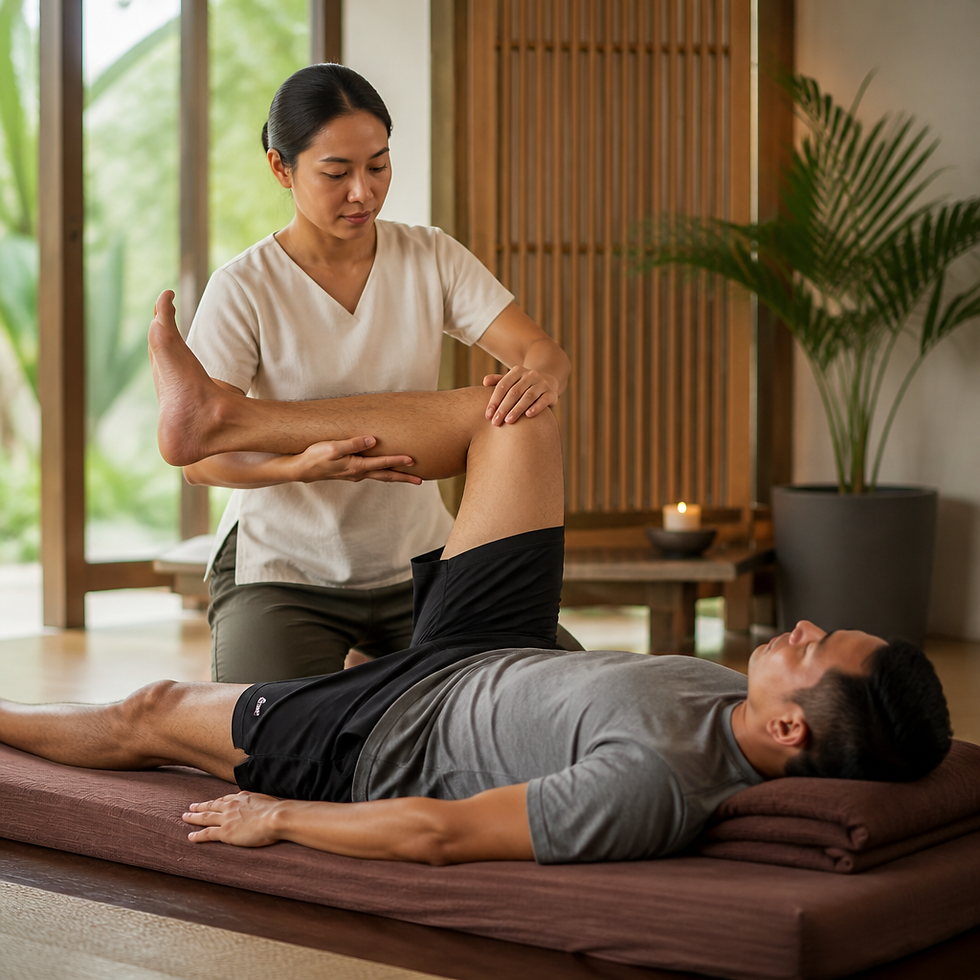



Thai Massage for Athletes: Stretching and Recovery Guide

Ask a runner who has tried Thai massage what it felt like, and you will usually hear some version of "I was stretched in ways I never manage alone, and I walked out loose." That is the appeal for people who train hard and travel hard. Thai massage for athletes is not a substitute for sports physiotherapy or a deep tissue session before a race. It is a floor-based, assisted stretching practice that moves the whole body, which makes it useful between training blocks, on rest days, and after the long bus rides and domestic flights that come with touring Thailand. This guide covers what the work does well, where it falls short, and how to book it without losing a recovery day.
Table of Contents
Quick Takeaways
Key Insight | Explanation |
|---|---|
Book 24 to 48 hours after your hardest session | Legs that are still raw from a heavy workout often guard during assisted stretching. A day or two of settling time lets the therapist work through range instead of fighting soreness. |
Name your sport and your current load in the first minute | A cyclist's hip flexors, a swimmer's shoulders, and a trail runner's calves need different pressure and different stretch choices. |
Stop assisted range at the first sign of guarding | If your body tightens to resist, the stretch has gone past what is useful. Good sessions end with more ease, not more force. |
Choose 60 minutes on travel days | A full 90 minutes after a long transfer can leave you groggy for the evening. A shorter session keeps you mobile for the next day's movement. |
Report sharp pain, numbness, or swelling immediately | These are signals for a medical assessment, not for more pressure. Speak up during the session and see a clinician afterward if symptoms persist. |
Treat it as one tool, not the whole plan | Thai massage works best alongside sleep, sensible training load, and your own mobility routine. It cannot replace any of those three. |
Why Thai Massage Fits Athletic Recovery
Most sports massage starts with the sore spot and works on it directly. Thai massage starts from a different question: how is the whole body moving, and where is it stuck? In a traditional session, the client lies on a mat on the floor and takes an active part in the movements, rather than lying passively on a table. That single change in format shapes everything else about the work.

How the floor-based format changes the work
On a mat, the therapist can use their own body weight, leverage, and gravity to move your limbs through a wider range than they could safely push by hand alone. You are not required to hold a position, which is why many athletes describe the session as movement that happens to them rather than effort they must produce. Sports-focused descriptions of Thai massage commonly list assisted stretching, rhythmic pressure, supported joint movement, and attention to breath and pacing as its core elements.
The practical result is that a therapist can take a tight hamstring through a long, slow lengthening while you keep your pelvis and lower back relaxed. That combination is hard to reproduce on a massage table, and it is the main reason athletes with stiff, overtrained bodies tend to seek it out.
What athletes tend to notice
Athletes who book regular sessions usually report the same three things: they feel less heavy in their legs the next morning, their joints move more evenly, and they sleep better on nights after work. These are reported experiences, not measured outcomes, and they vary from person to person. Still, they are consistent enough that they are worth knowing before you book.
In practice, the benefit shows up most clearly when your training has been repetitive, such as a week of long runs or a stack of heavy lower-body sessions. Sessions do less for a one-off soreness after an unfamiliar workout, where a sports massage or a simple easy day often does more.
Where the evidence stands
Be realistic about the research. Medical News Today notes that many of the benefits people attribute to Thai massage are reported rather than firmly established by large studies, and that includes the claims about athletic performance. Cleveland Clinic describes the practice as focused on stretching and yoga-style poses that aim to improve flexibility, ease back pain, and reduce stress and anxiety. Those are sensible goals, but they are goals, not guarantees.
Assisted Stretching: What It Does and Where It Stops
Stretching is the part of Thai massage that athletes care about most, and it is also the part most likely to go wrong. The therapist does the lengthening, which removes the effort of holding a position. That sounds like a free upgrade, but it changes how your nervous system responds, and it changes what a good stretch feels like.
Why assisted range beats forced range
When you stretch alone and push hard, the muscle often braces against the pull. Thai massage tends to work in the opposite direction, letting the tissue lengthen gradually while the athlete stays relaxed. Over several sessions, that can translate into range you can access during your own warm-up without forcing it.
The aim is not to chase extreme flexibility. For most athletes, the useful goal is enough range to squat, run, row, or swing without compensating through the lower back or knees. Sessions that focus on that target tend to feel more productive than sessions that aim for the deepest possible split.
Common stretching mistakes on the mat
The most common mistake is treating the session as a contest. Athletes who are used to pushing through discomfort sometimes resist the therapist's movements, which cancels out the benefit. If you feel your body tightening, say so, and let the therapist ease off.
The second mistake is booking deep stretching work on a day you have a high-intensity session planned. Your muscles may be looser afterward, but the next hard effort can feel less stable, especially in the hips and hamstrings. Keep the big stretching sessions for rest days or the day after a hard workout.
Pro tip: Before the session starts, tell the therapist one movement you want to keep feeling good for the next 48 hours, such as your squat depth or your overhead reach. Good therapists will build the last ten minutes around that goal.
Recovery Timing After Training
Timing is where most athletes make their first mistake. A session on the same morning as a race or a hard interval block tends to disappoint, because the body is still inflamed and guarded. A session two days after a hard effort usually lands better, and a session during a lighter week often gives the clearest benefit.
Best windows in a training week
For most endurance and strength athletes, the most useful window is one to two days after the hardest session of the week, with a lighter day before the next big effort. That gap gives the therapist something to work with, because the tissue has already started to settle. It also gives you a chance to notice what changed before you load the body again.
If you train for a competition, book your last session at least a day before the event, not the morning of. Some athletes feel a little loose and sleepy afterward, which is not ideal when you need sharp reactions the next day.
Session length and intensity
Longer is not automatically better. Ninety-minute sessions give the therapist more time to work through the whole body, but they can also leave you tired, especially if you have already done a long training day or a flight. For active travelers and athletes in a heavy block, a 60-minute session is often enough to restore movement without draining the next day.
Intensity matters too. A firm, rhythmic session feels good to many people, but if you are sore, ask for lighter pressure and more gentle movement. Good practitioners adjust mid-session when you tell them what your body is doing.
Recovery work succeeds when the athlete leaves with more available movement and no new soreness. If the next day feels heavier, the session was too much, too late, or too intense for the training load you were carrying.
Thai Massage vs Sports Massage and Foam Rolling
Thai massage is not the only recovery option, and it is rarely the best choice for every situation. Athletes who understand what each approach does tend to build a more useful routine. The table below compares three common options by what they do well and where they fall short.
Approach | Best use | Limitations |
|---|---|---|
Thai massage (floor-based, assisted stretching) | Restoring whole-body mobility between training blocks, and easing stiffness after long travel days | Less targeted for a single sore spot, and the stretching depends on how relaxed you can stay during the session |
Conventional sports massage (table-based, targeted work) | Working a specific tight area, such as a calf or forearm, before or after competition | Less range-of-motion work, and deep pressure can be uncomfortable the day after a hard effort |
Foam rolling and self-massage | Daily maintenance you can do yourself, including on rest days and in hotel rooms | Cannot move your limbs for you, so it does not deliver the assisted lengthening that Thai massage provides |
How to combine them
A practical pattern many athletes follow is to use foam rolling daily, sports massage when a specific area flares up, and Thai massage once or twice a month during heavy blocks. That structure keeps each tool doing the job it does best. It also prevents you from expecting a single session to fix problems that build up over weeks.
If you are traveling, you can keep the same logic with fewer tools. Pack a small roller or ball, plan one Thai massage session for a recovery day, and use bodyweight mobility work between transfers.
Active Traveler Recovery Planning in Thailand
Many people visit Thailand to hike, cycle, climb, surf, or simply stay active between beach days. The country makes it easy to keep moving, but heat, humidity, and long transfers can quietly build fatigue. Planning your recovery days around your itinerary makes a noticeable difference.
October is still close to the end of the rainy season in many parts of the country, so expect humid days and occasional heavy downpours. Those conditions make dehydration and fatigue more likely, especially after outdoor training in the afternoon.
Scheduling around flights and transfers
Long road or air transfers stiffen the hips, hamstrings, and lower back more than most people expect. A Thai massage session the afternoon after a long journey can help restore movement, but book it for later in the day rather than immediately after arrival, when you may still be dehydrated and tired.
If you are moving between cities for a multi-stop trip, put your recovery session on the day you have the fewest transfers. Trying to fit a massage between two long journeys often leaves you rushed and less able to relax.
Heat, hydration, and timing
Heat changes how your body responds to pressure and stretching. Athletes who train outdoors in the afternoon often feel more drained than they expected, and the same stretch can feel less effective when the body is overheated. Drink water through the day, not just before the session, and avoid a large meal in the hour before you lie down on the mat.
In practice, morning sessions suit many active travelers because the body is cooler and you still have the rest of the day to recover. Ask your provider about their room conditions, since a warm, poorly ventilated room can make the session less comfortable.

Pro tip: Schedule your Thai massage on the day after your longest trek, ride, or flight, and leave the following morning free. If you book a session right before a long activity, you may feel loose but unstable for the first hour.
Choosing a Therapist for Athletes
Thai massage quality varies widely, and an athlete needs more from a session than a generic relaxation experience. The right therapist listens, adjusts pressure and range, and understands when to stop. Choosing well takes a few questions and some attention during the first session.
What to ask before you book
Ask whether the therapist regularly works with athletes or active clients, and what sports they have seen. You do not need a specialist for every sport, but a provider who has worked with runners, climbers, or cyclists will usually ask better questions about your training. Ask how the session is structured too. Some therapists follow a fixed sequence, while others adapt to what you tell them.
Also ask how they handle injuries you mention. A good provider will say clearly what they can work on, and what they will avoid until you have been assessed by a clinician.
Signs a session is going well
You should feel progressively looser without feeling exhausted or sore. The therapist should check in with you during the movements, not just at the start. If you finish the session feeling more guarded or irritated, that is a sign of a mismatch, either in pressure, range, or communication. Say so next time, and consider a different provider if the problem continues.
Keep notes after each session, including what you did the day before, how your body felt the next morning, and which movements helped. Over a few sessions, those notes will show you what your body responds to.
When to Skip Thai Massage
Thai massage is a manual therapy that involves pressure, stretching, and joint movement, so it is not suitable for every athlete at every stage of training. Knowing when to skip it protects both your recovery and your long-term health.
Conditions that need a clinician first
Get a medical assessment before booking if you have a suspected fracture, a recent surgery, unexplained swelling in one leg, a history of blood clots, or sharp pain that does not settle within a few days. Those situations need an accurate diagnosis, and manual work can make some of them worse. Recent injuries that have not been checked belong with a physician or physiotherapist.
Be honest with the therapist about any current medication, pregnancy, or medical condition. A reputable provider will ask about these before the session and may adjust or decline the work.
Pressure and position limits
Some athletes find the deeper stretches uncomfortable, especially if they have joint hypermobility or have recently strained a ligament. Tell the therapist early if a position feels unsafe, rather than tolerating it through the session. You can also ask for a version of each movement that stays within your comfort zone.
Never accept a stretch that produces sharp, electric, or radiating pain. Those signals mean stop, not push further.
Frequently Asked Questions
Is Thai massage good for athletes before a competition?
It can be, but timing matters. A session a day or two before an event tends to suit most athletes better than a session on the morning of the race. Sessions done too close to competition can leave you feeling loose and less stable, which is not ideal when you need sharp reactions.
How often should an athlete book Thai massage?
Most athletes find one session every two to four weeks works well during regular training. During a heavy training block or a long trip, a session every one to two weeks may suit you better. Pay attention to how you feel the next morning and adjust from there.
Does Thai massage replace sports massage or physiotherapy?
No. Thai massage focuses on assisted stretching and whole-body movement, while sports massage often targets a specific area and physiotherapy addresses diagnosed injuries. Many athletes use Thai massage alongside those services rather than instead of them.
Is Thai massage safe for active travelers with a busy itinerary?
It is generally safe for healthy adults, provided you tell the therapist about any injuries, medical conditions, or medications. Plan sessions for recovery days rather than before long activities, and drink water before and after the session because heat and humidity increase fatigue.
What should I do if a session leaves me sore the next day?
Mild tenderness can happen after deeper work, but it should fade within a day or two. Next time, ask for lighter pressure, shorter stretches, and a session that avoids the most fatigued areas. If soreness persists or worsens, see a clinician before booking again.
Have you tried Thai massage during a heavy training block or on a trip across Thailand? Share what worked for your sport, what you would change next time, and how your body responded in the following days.


Comments