

How Thai Massage Therapists Are Trained


Introduction
Traditional Thai massage is recognized around the world for its unique combination of stretching, rhythmic pressure, and centuries-old techniques. Behind every professional treatment is a therapist who has completed formal education and practical training before working with clients.
During our interviews with licensed Thai massage therapists, we asked about their education and how they learned their profession. Although training programs can vary by school and specialization, the therapists described a structured learning process that combines classroom instruction with supervised hands-on practice.
This article explains what aspiring therapists typically study, how they develop practical skills, and why professional training plays an important role in providing safe and effective massage services.
Key Takeaways
Many therapists attend Ministry-approved massage schools.
Entry-level traditional Thai massage programs commonly include around 150 hours of training.
Students learn anatomy, traditional massage theory, and practical techniques.
Hands-on practice is an essential part of the curriculum.
Graduates receive certification from their training institution after meeting program requirements.
Many therapists continue learning throughout their careers through additional courses and practical experience.
Table of Contents
Why Training Matters
Ministry-Approved Massage Schools
The 150-Hour Training Program
Learning Anatomy
Pressure Points and Traditional Techniques
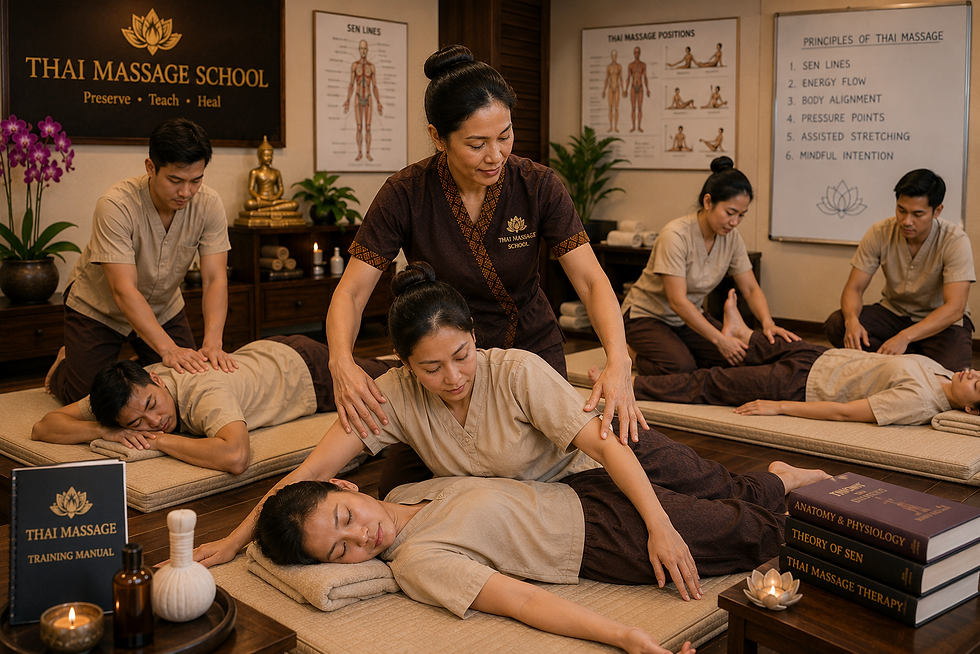
Practical Hands-On Training
Certification
Continuing Education
Therapist Insights
FAQ
Final Thoughts
Why Professional Training Matters
Traditional Thai massage requires more than simply learning a series of stretches.
Professional therapists must understand:
Safe body positioning
Appropriate pressure
Client communication
Professional hygiene
When a client should be referred for medical evaluation instead of massage
According to the therapists we interviewed, formal education provides the foundation needed to perform treatments safely and professionally.
Ministry-Approved Massage Schools
Several therapists told us they completed their education at massage schools approved by Thailand's public health authorities.
These schools typically provide structured instruction that combines classroom learning with supervised practical experience.
Training programs are designed to teach students both the traditional principles of Thai massage and the practical skills required to work with clients in professional settings.
Different schools may have their own curriculum and additional specialty courses, but professional education follows a structured progression rather than informal observation alone.

The 150-Hour Training Program
According to the therapists we interviewed, many entry-level traditional Thai massage programs include approximately 150 hours of instruction.
Although course content varies by institution, students commonly study:
Traditional Thai massage techniques
Human anatomy
Pressure points
Client assessment
Hygiene and sanitation
Professional ethics
Practical clinical training
Some therapists continue with advanced courses after completing their initial certification.
Learning Anatomy
Understanding the human body is an important part of therapist education.
The therapists explained that anatomy lessons help students learn about:
Major muscle groups
Bones and joints
Movement and flexibility
Areas requiring extra care
This knowledge helps therapists apply techniques more safely and adapt treatments to different clients.
While Thai massage has its own traditional concepts, anatomy training also provides a modern understanding of the body's structure.

Pressure Points and Traditional Techniques
Traditional Thai massage includes techniques that involve applying pressure with:
Thumbs
Palms
Forearms
Elbows
Feet (in some advanced techniques)
The therapists explained that students spend considerable time learning how to apply pressure correctly and safely.
They also learn how to adjust pressure according to each client's comfort level and physical condition.
Professional therapists are taught that communication with the client is just as important as the technique itself.

Practical Hands-On Training
Classroom instruction is only one part of becoming a therapist.
According to the therapists, students spend many hours practicing under instructor supervision before working independently.
Practical training includes learning how to:
Position clients correctly
Perform stretching techniques safely
Maintain proper body mechanics
Communicate during treatment
Adapt pressure for different clients
This supervised practice helps students build confidence while receiving feedback from experienced instructors.

Certification
After successfully completing their training program, students may receive certification from their massage school.
According to the therapists we interviewed, certification demonstrates that they have completed the required coursework and practical training offered by that institution.
Some employers may also have additional hiring requirements or provide further on-the-job training.
Visitors looking for a professional massage can often see therapist certificates displayed inside reputable massage clinics.

Continuing Education
Learning doesn't stop after graduation.
Several therapists explained that they continue improving their skills through:
Daily practical experience
Advanced massage courses
Specialized workshops
Learning new wellness techniques
Sharing knowledge with experienced colleagues
Ongoing education helps therapists refine their techniques and expand the services they can provide.
Therapist Insights
According to the therapists we interviewed...
Most described beginning their careers by attending a Ministry-approved massage school, where they completed approximately 150 hours of classroom and practical instruction.
They studied anatomy, traditional massage techniques, pressure points, hygiene, and client care before earning certification from their training institution.
Several therapists also emphasized that experience gained through working with clients is just as valuable as classroom education and continues throughout their careers.
Why Certification Matters for Clients
For visitors choosing a massage shop, therapist education can provide additional confidence.
A professionally trained therapist is more likely to:
Understand safe massage techniques.
Adapt treatments to individual comfort levels.
Recognize when massage may not be appropriate.
Communicate professionally with clients.
Follow hygiene and sanitation practices.
While certification alone does not guarantee quality, it is one indicator of formal training.
FAQ
How long does it take to become a Thai massage therapist?
According to the therapists we interviewed, many entry-level traditional Thai massage programs include approximately 150 hours of training, although additional courses and advanced certifications are available.
What subjects do students study?
Typical programs include anatomy, traditional Thai massage techniques, pressure points, hygiene, client care, ethics, and supervised practical training.
Do therapists practice before working with clients?
Yes. Hands-on practice under instructor supervision is a core part of professional training.
Are therapists certified?
According to the therapists we interviewed, students receive certification after successfully completing their massage school's training requirements.
Do therapists continue learning after certification?
Yes. Many therapists improve their skills through experience, advanced training courses, and continuing education opportunities.
Final Thoughts
Traditional Thai massage reflects generations of knowledge, but today's professional therapists also rely on structured education, practical experience, and ongoing learning.
The licensed therapists we interviewed described a training pathway that combines approximately 150 hours of formal instruction with anatomy education, supervised practice, and certification before working independently.
For visitors, understanding this training process offers greater appreciation for the expertise behind a professional Thai massage and highlights the importance of choosing therapists who have received formal education.
Continue Exploring ThailandMassage.org
Related articles:
How to Choose a Legitimate Massage Shop in Thailand
What to Expect During a Traditional Thai Massage
Thai Massage Safety Guide for First-Time Visitors
A Day in the Life of a Thai Massage Therapist
Most Common Problems Thai Massage Therapists Treat
Thailand Massage Directory
Suggested Internal Links
How to Choose a Legitimate Massage Shop in Thailand
Thai Massage Safety Guide
What to Expect During a Traditional Thai Massage
A Day in the Life of a Thai Massage Therapist
Common Problems Thai Massage Therapists Treat
Thailand Massage Directory
Suggested External Authority Sources
Department of Thai Traditional and Alternative Medicine
Thailand Ministry of Public Health
Tourism Authority of Thailand (TAT)
World Health Organization (WHO) – Traditional Medicine
Video Suggestions
Inside a Thai Massage School: How Therapists Are Trained
A Licensed Therapist Explains the Thai Massage Certification Process
Learning Traditional Thai Massage: Classroom to Clinic
Why Professional Training Matters in Thai Massage
SEO Opportunity
This article can become one of the strongest E-E-A-T pages on ThailandMassage.org because it is based on interviews with licensed therapists. Enhance it by embedding photos or short videos from the massage schools, images of certificates (with permission), and interview clips describing the therapists' training. Original firsthand content strengthens credibility and differentiates your site from competitors that rely solely on generic summaries.


Comments