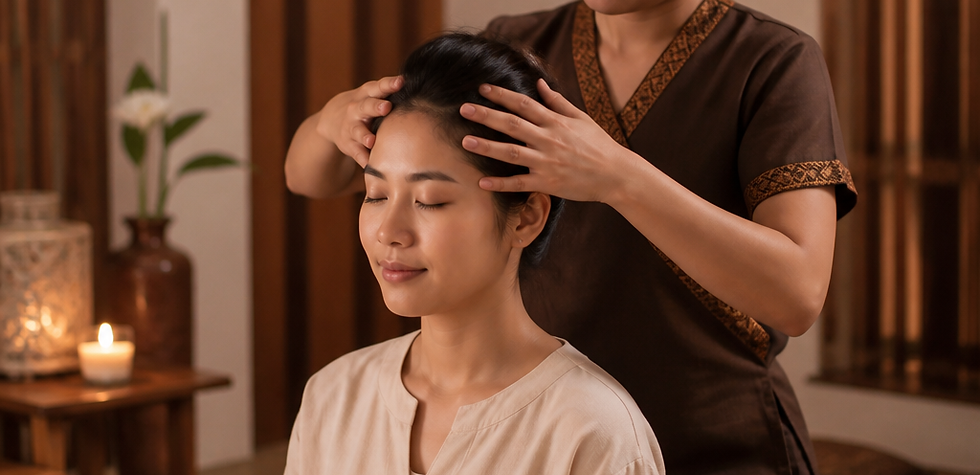


Thai Head Massage: Techniques, Benefits & Where to Try

Most travelers book a full-body Thai massage and leave without ever trying the treatment that locals consider one of the most potent stress relievers in the entire tradition. Thai head massage targets the skull, scalp, neck, and upper shoulders using a precise combination of acupressure, compression, tapping, and assisted stretching, all rooted in a medical system more than 2,500 years old. If you carry tension in your neck, struggle with tension headaches, or simply want a session you can slip into during a lunch break without undressing, this treatment is worth understanding before you book anything in Thailand.
Table of Contents
Quick Takeaways
Key Insight | Explanation |
|---|---|
Performed fully clothed, usually dry | Traditional Thai head massage requires no oils and no undressing, making it practical even mid-travel itinerary. |
Eight of ten Sen lines connect to the head | Most of the body's primary energy pathways (Sen Sip) converge at the cranial region, which is why Thai practitioners treat the head as a whole-body intervention. |
Techniques go well beyond scalp rubbing | Compression, rotations, chopping, tapping, muscle energy techniques, and neck stretches are all part of an authentic session. |
Scalp massage has documented effects on hair thickness | A 2016 study published in PMC observed increased hair thickness in participants who received standardized scalp massage over 24 weeks. |
Sessions typically run 30 to 60 minutes | Many spas offer it as a standalone 30-45 minute treatment or as an add-on to a full-body session. |
Neck and shoulder work is non-negotiable | Authentic Thai head massage always includes the cervicodorsal area. Any treatment that stops at the skull is an incomplete version. |
Not suitable for everyone | Those with recent head or neck injuries, high blood pressure, or osteoporosis should consult a physician before booking. |
What Is Thai Head Massage?
Thai head massage, sometimes called craniofacial massage within the Thai traditional medicine system, is a focused treatment that addresses the scalp, skull, neck, shoulders, and often the upper back. It is not a standalone invention. It sits within the larger framework of Nuad Boran (traditional Thai massage), a holistic system that views the body as an interconnected network of energy pathways called Sen lines.
Traditional Thai medicine is rooted in a medical system more than 2,500 years old, drawing on Indian Ayurvedic medicine, Buddhist philosophy, and indigenous Thai healing practices. At the core of this system is the concept of lom, the vital life force or "wind" that flows through the body. When lom moves freely through the Sen lines, health and vitality follow. When it becomes blocked or imbalanced, physical discomfort, stiffness, and fatigue arise.
Eight of the ten primary Sen Sip energy lines, including Sen Sumana, Sen Kalathari, Sen Pingkhala, Sen Ittha, Sen Thavari, Sen Sahatsarangsi, Sen Lawusang, and Sen Ulangka, are directly linked to the head. This is not a minor anatomical detail. It means that a skilled Thai practitioner working on the head and neck is, within this framework, influencing respiration, circulation, sensory perception, and emotional balance simultaneously.


Pro tip: When booking a Thai head massage, ask specifically whether the session includes neck and shoulder work. A session that covers only the scalp is a Western-style adaptation, not a traditional Thai treatment. The neck and upper back are where most of the structural tension lives.
Core Techniques Used in a Session
What separates an authentic Thai head massage from a casual scalp rub is the deliberate sequencing of techniques, each serving a different physiological purpose. Therapists typically work through a combination of the following methods.
Acupressure on Sen Points
The therapist uses thumbs and fingers to apply firm, sustained pressure to specific points along the Sen lines on the scalp, temples, occiput (the base of the skull), and the sides of the neck. This is not random pressing. Each point corresponds to a specific pathway, and working them in sequence is intended to restore flow rather than simply release surface tension.
Compression and Kneading
The palms and fingers are used to compress and knead the scalp and the large muscle groups of the neck and upper shoulders, particularly the trapezius and levator scapulae. Gentle kneading relaxes tight muscles and soothes the scalp, while deeper compression works into the belly of the muscle where chronic tension accumulates.
Tapping and Chopping
Rhythmic tapping with the fingertips or a light chopping motion with the sides of the hands is applied to the scalp and upper trapezius. This stimulates circulation, activates the lymphatic system, and creates a light percussion effect that many clients describe as immediately energizing.
Neck Rotations and Mobilizations
The therapist takes the weight of the client's head in their hands and guides slow, controlled rotations and lateral flexions. This releases restriction in the cervical joints and the surrounding musculature. A common mistake is tensing the neck muscles during this phase. The key is letting the therapist carry the weight entirely.
Muscle Energy Techniques and Stretching
More advanced Thai head massage incorporates muscle energy techniques, where the client gently resists the therapist's movement, creating a neurological release when the contraction stops. Combined with passive neck stretches, this produces a depth of release that simple pressure alone cannot achieve.
The head is where eight of the body's ten primary energy channels converge. Treating it well is not a luxury add-on. In Thai traditional medicine, it is foundational work.
Benefits of Thai Head and Neck Massage
The benefits are real, and some are better supported by research than others. Here is an honest breakdown, without overpromising.
Tension Headache Relief
Acupressure targeting the temples, occiput, and the suboccipital muscles at the base of the skull directly addresses the most common mechanical causes of tension headaches. Therapists apply pressure to points that help alleviate headaches and reduce the referred pain that travels from the neck into the skull. This benefit is consistent and immediate for most clients.
Stress and Cortisol Reduction
Massage therapy research shows that scalp and head massage reduces cortisol levels and increases serotonin and dopamine, producing a neurochemical shift that activates the parasympathetic nervous system. Even brief sessions of five to ten minutes produce measurable short-term stress relief. A full Thai head and neck session compounds this significantly through the added neck and shoulder work.
Improved Blood Circulation to the Scalp
Kneading and compression increase blood flow to hair follicles, delivering more oxygen and nutrients to the scalp. A 2016 study published in PMC observed increased hair thickness in participants who received standardized scalp massage over 24 weeks. The effect on hair growth is preliminary and requires consistent, regular practice rather than a single session, but improved scalp circulation is a well-supported short-term outcome.
Neck Pain and Stiffness Reduction
The Thai neck massage component is particularly valuable for people whose work involves prolonged sitting, screen use, or poor posture. The cervicodorsal area and shoulder girdle are particularly prone to strain from these habits. Neck rotations, stretches, and deep compression into the trapezius produce genuine relief that clients often notice for several days after treatment.
Mental Clarity and Improved Sleep
Improved blood flow and oxygenation to the brain, combined with the parasympathetic activation from the massage, induces deep relaxation. Many clients report improved mental clarity immediately after a session, and better sleep quality in the nights following a thorough treatment.

Pro tip: If you are coming specifically for neck pain relief, tell your therapist before the session begins, not during. This allows them to adjust their sequence from the start, spending more time on the cervicodorsal region and less on the purely relaxation-oriented scalp work.
Thai Head Massage vs. Other Styles
Travelers often encounter several types of head massage in Thailand and abroad, and conflating them leads to mismatched expectations. The comparison below addresses the three most commonly encountered styles.
Style | Key Characteristics | Best For |
|---|---|---|
Traditional Thai Head Massage | Dry (no oil), performed clothed on a mat or seated, includes neck and shoulder work, uses acupressure, compression, rotations, tapping, and muscle energy techniques along Sen lines | Neck tension, tension headaches, energy rebalancing, whole-body wellness through the head |
Indian Head Massage (Champissage) | Often uses oil, focuses on acupressure points along head, neck, and shoulders, more rhythmic and energetic strokes, emphasizes the Ayurvedic chakra system | Scalp conditioning, stress relief, those who prefer a more rhythmically stimulating style |
Western Spa Head Massage | Usually a shorter add-on (under 30 minutes), seated or lying down, focuses on relaxation rather than therapeutic outcomes, may use oils or lotions | Quick relaxation, travelers wanting a low-commitment, low-pressure experience |
The Thai approach is the most structurally thorough of the three. It treats the head as the convergence point of the body's energy system rather than an isolated zone, which is why the neck, upper back, and shoulder girdle are always included. If you are in Thailand and a menu lists "head massage" without specifying what it includes, ask before you book.
What to Expect in a Session
A Thai head massage session typically begins with an intake conversation. A good therapist will ask about your primary goals (relaxation, headaches, neck tension, or jaw discomfort), any recent injuries or medical conditions, and whether you prefer a dry session or are open to a light herbal balm on the neck and forehead. This is not formality. It genuinely shapes how the therapist sequences the treatment.
Most sessions are performed with the client seated in a chair or lying fully clothed on a massage mat. No undressing is required. The standard session is dry, meaning no oil is applied to the scalp, which makes it easy to return to daily activities immediately after. Some spa-inspired variations offer a warm herbal oil option for the neck and shoulders, applied carefully away from the scalp. Sessions typically run 30 to 45 minutes as a standalone treatment, or up to 60 minutes when combined with upper back work.
The sequence usually moves from the upper back and shoulders inward toward the neck, then up across the scalp and temples. The therapist may finish with gentle work around the face and forehead, ending with the client in a supine (lying-down) position. A lightly scented herbal balm is sometimes used as a finishing touch on the neck and forehead in this final phase.
First-time clients are often surprised by how firm the neck compression and the occipital pressure can feel. Communicate with your therapist throughout. Thai massage culture fully supports requests to adjust pressure, and a skilled practitioner will recalibrate without it disrupting the session.
Where to Try Thai Head Massage in Thailand
Head and neck massage is available across Thailand's major wellness destinations, from the street-level massage shops in Bangkok to dedicated spa facilities in Chiang Mai and the island resorts of the south. Knowing what to look for in each context will save you a mediocre booking.
Bangkok
Bangkok has the widest range of options, from budget massage studios around the BTS network to upscale spa facilities in major hotels. The Thai scalp massage is frequently offered as part of a head-and-shoulder package at mid-range spas in areas like Sukhumvit and Silom. In Bangkok specifically, many therapists have formal training in acupressure techniques, and the city's spa culture means it is easy to find a practitioner fluent in the precise sequence this treatment requires. For the most authentic traditional experience in Bangkok, look for spas affiliated with Wat Pho's traditional medicine school, which continues to set the standard for verified technique.
Chiang Mai
Chiang Mai is considered by many wellness travelers as Thailand's most rewarding massage destination, and for good reason. The city has a dense concentration of trained therapists and an established tradition of instruction in traditional Thai medicine. Head and neck massage here is often integrated into longer wellness packages at eco-spas in the old city area. Fah Lanna Spa, located in the Old City district of Chiang Mai, is a consistently well-reviewed destination that offers traditional treatments in a heritage setting. Price points in Chiang Mai tend to be lower than Bangkok for comparable quality, with traditional sessions frequently starting around 200 to 300 baht for basic street-level treatments and rising to several hundred baht more at dedicated spa facilities.
Phuket and the Southern Islands
Resort spas in Phuket, Koh Samui, and Koh Lanta typically offer head massage as part of larger spa packages. The quality here varies more than in Bangkok or Chiang Mai because the demand is often driven by tourists expecting a relaxation add-on rather than a therapeutic treatment. The best results come from spas that clearly distinguish traditional Thai techniques from their more generic spa offerings. Ask specifically for a therapist trained in Nuad Boran rather than booking a generic "head and shoulder relaxation" session.
Wat Pho, Bangkok
The Wat Pho Traditional Medical and Massage School in Bangkok remains one of the most reputable training institutions for traditional Thai massage in the country. The school's affiliated massage pavilions within the temple complex offer treatments performed by students under supervision and by certified graduates. For a traveler wanting to know they are receiving a textbook-authentic session, this is the most reliable reference point in the country.
How to Choose the Right Spa or Therapist
The quality difference between a genuinely skilled Thai head massage and a perfunctory scalp rub is significant. These are the criteria that actually matter when selecting a provider in Thailand.
Look for therapists with documented training. Certificates from recognized Thai massage schools, particularly those affiliated with the Ministry of Public Health's approved curriculum, indicate formal technique training. This matters more for head and neck work than for foot massage, because the cervical spine requires careful handling.
Pay attention to how the intake conversation is conducted. A therapist who asks nothing about your medical history before working on your neck and skull is not following best practice. This is a meaningful filter.
Ask whether the session includes neck and shoulder work. If a spa's menu lists a 30-minute "head massage" that the staff describes as scalp-only, that is a Western-style adaptation. An authentic Thai head massage session always includes the cervicodorsal region. Knowing this distinction in advance prevents disappointment.
Consider the physical environment. Traditional Thai head massage is often performed on a mat or in a proper massage chair with back support, not on a reclining lounger. A setup that looks like a hair salon chair is a signal that the treatment is more cosmetic than therapeutic.
Pro tip: If you are unsure about a spa's quality, book a single 30-minute session first before committing to a longer package. The first five minutes of a Thai head massage reveal the therapist's training: a skilled practitioner establishes contact with structured, deliberate pressure from the start rather than tentative stroking.
Frequently Asked Questions
Is Thai head massage the same as a scalp massage?
No. A scalp massage targets only the skin and muscle of the scalp. Thai head massage is a broader treatment that includes the scalp, skull, temples, occiput, neck, and upper shoulders. It incorporates acupressure on Sen energy lines, neck rotations, compression, and muscle energy techniques. The scalp component is one part of a much more structured therapeutic sequence.
Will oil be applied to my hair during a Thai head massage?
Not by default. Traditional Thai head massage is typically performed dry, with no oil applied to the scalp or hair. This makes the treatment convenient for travelers who need to return to activities afterward. Some spa-inspired variations offer a warm herbal oil option for the neck and shoulders only. If you specifically want oil on the scalp, you need to request it and confirm that the therapist will apply it carefully to avoid the eye area.
How often should I get a Thai head and neck massage to see real benefits?
For general relaxation and stress relief, a single session produces immediate benefits that many clients feel for several days. For targeted issues like chronic neck tension or recurring tension headaches, regular sessions, roughly once a week or every two weeks, produce progressively better outcomes as the therapist can work deeper into layers of accumulated tension. For scalp health benefits, research suggests that consistent, frequent massage over a period of weeks is necessary to observe changes in hair thickness or follicle health.
Are there any situations where Thai head massage should be avoided?
Yes. People with recent head or neck injuries, including whiplash, should not receive Thai neck massage until they have medical clearance. Those with high blood pressure, osteoporosis, blood clotting disorders, recent surgery, or active skin conditions on the scalp should consult a physician before booking. Thai massage in general should be avoided during recovery from injury, and the head and neck region specifically demands extra caution because of the proximity to the cervical spine.
What is the difference between Thai head massage and Indian head massage?
Thai head massage uses a dry technique and integrates acupressure along Sen energy lines, neck and shoulder compression, rotations, muscle energy techniques, and stretching. Indian head massage, known as Champissage, typically incorporates oil and uses more rhythmic, energetic strokes focused on acupressure points linked to the Ayurvedic chakra system. Both address the head, neck, and shoulders, but the structural and philosophical frameworks differ significantly. Thai head massage is the more thorough treatment for neck and shoulder tension specifically.
Can I get a Thai head massage as a standalone session or does it need to be part of a full-body treatment?
You can absolutely book it as a standalone session. Most spas in Thailand offer 30 to 60 minute Thai head and shoulder sessions independent of full-body treatments. This makes it one of the most accessible massage treatments for travelers with limited time. You remain fully clothed, no preparation is required, and the session leaves no oil residue, so it fits naturally into a busy travel day without any logistical complications.
How much does a Thai head massage typically cost in Thailand?
Prices vary considerably by location and type of establishment. Budget street-level massage shops in Chiang Mai may offer basic head and shoulder sessions starting around 200 to 300 Thai baht for 30 minutes. Mid-range spas in Bangkok and Chiang Mai typically charge between 400 and 800 baht for a 45 to 60 minute traditional head massage session. Luxury hotel spas and resort facilities can charge significantly more. The price difference between a 200 baht session and an 800 baht session does not always correlate directly with technique quality, but certified therapist training, a clean facility, and a structured intake process are markers worth paying for.
Have you tried a traditional Thai head massage during your travels in Thailand? Share what you noticed, what worked, what surprised you, or which city gave you the best experience in the comments below.
References
Detailed guide to what a Thai head massage is, its tools, and how a session is structured
Comparison of Thai and Indian head massage techniques, origins, and therapeutic approaches
Explanation of Sen energy lines in traditional Thai medicine and their role in Thai massage therapy
Overview of the eight primary Sen Sip energy lines connected to the head in Thai cranial massage
Research-based review of scalp massage benefits, including hair thickness and stress relief evidence


Comments