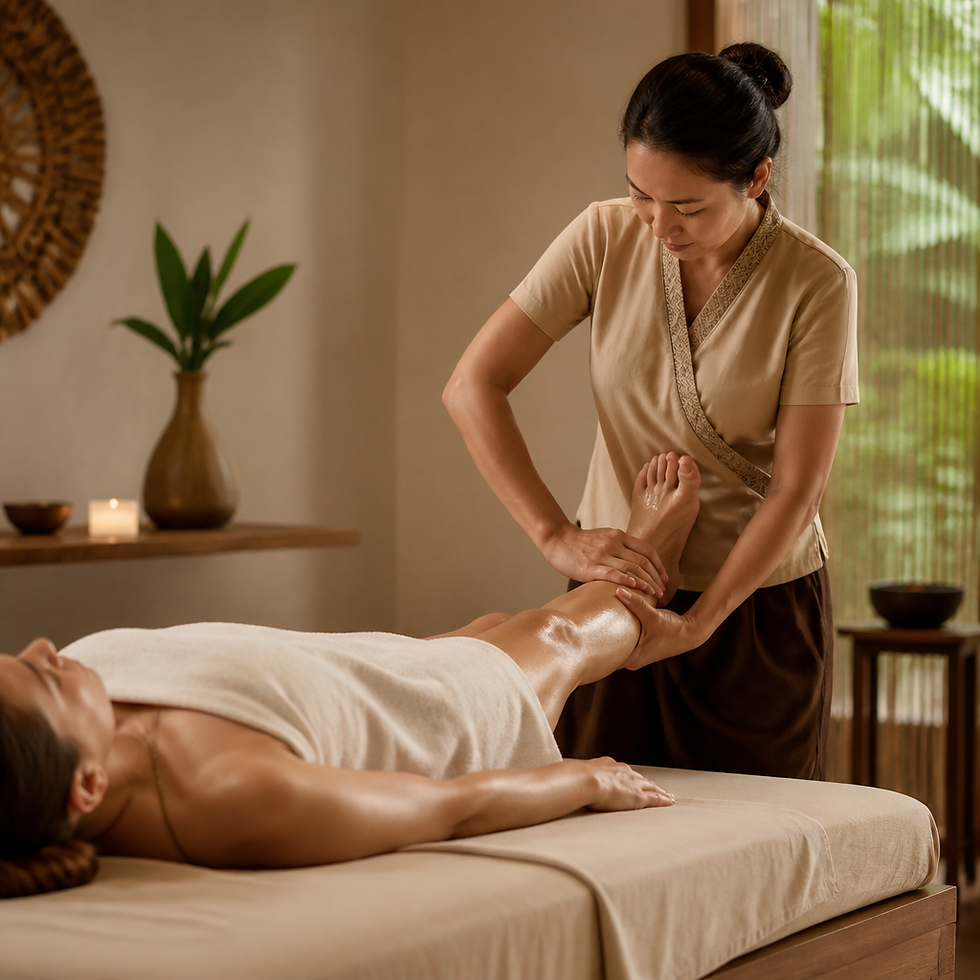



Thai Massage for Jet Lag: Treatments to Book on Arrival

You land in Bangkok after 10 hours in a pressurized metal tube, your hips are locked, your calves have swollen against your socks, and your brain is convinced it is 3 AM even though the street outside is bright and noisy. Thai massage for jet lag is not a marketing phrase. It is a genuinely logical use of a therapy that works on the exact physical problems a long flight creates: compressed muscles, sluggish circulation, a nervous system stuck on high alert, and a body that cannot settle into local time. Book the right treatment at the right moment and you can cut your recovery from three miserable days to one manageable evening.
Table of Contents
Quick Takeaways
Key Insight | Explanation |
|---|---|
Massage does not reset your body clock on its own | It removes the physical obstacles - stiff muscles, poor circulation, nervous tension - that make jet lag worse and prevent sleep at the right local time. |
Evening timing beats morning timing for most arrivals | A session in the early evening of your arrival day primes your body to fall asleep at a normal local hour, which is the single most effective jet lag reset. |
Traditional Thai massage is the top pick for flight stiffness | Its combination of assisted stretches and acupressure along sen lines addresses hip, shoulder, and lower-back compression directly - problems a relaxation oil massage will barely touch. |
Foot and leg reflexology works well for swollen legs | Rhythmic compression on the feet and lower legs helps shift pooled fluid and get venous blood moving again after hours of seated immobility. |
Herbal compress therapy adds a heat advantage | The warmth from hot luk pra kob compresses penetrates deep muscle tissue faster than hands alone, making it especially good for travelers whose muscles have gone cold and rigid mid-flight. |
Eastward flights generally produce worse jet lag | Flying from Europe or the Americas eastward into Thailand means your body must advance its clock, which is harder biologically. Budget an extra recovery session if arriving from the west. |
Tell your therapist you just flew in | A good therapist will adjust pressure, spend more time on calves and hips, and avoid overstimulating techniques late in the day that could delay sleep. |
What Jet Lag Actually Does to Your Body
Jet lag is a circadian rhythm sleep-wake disorder. It occurs when rapid travel across multiple time zones disrupts the internal body clock that regulates sleep, hormones, digestion, and energy levels. The more time zones you cross, the longer the recovery, and the mismatch can persist for a week or more in severe cases.
The flight itself piles a second problem on top: pure physical travel fatigue. Prolonged sitting in a reclined but never comfortable position compresses the lumbar spine, locks the hip flexors, and reduces circulation to the legs. Cabin pressure is lower than at sea level, cabin air is drier than almost any environment on land, and you are breathing recycled air for the entire journey. By the time you reach Thailand, your body is dealing with two overlapping problems at once: a clock that is wrong and a musculoskeletal system that has been slowly destroyed for half a day.
Jet lag symptoms most travelers report include daytime sleepiness, nighttime insomnia, fatigue, reduced mental sharpness, low mood, disrupted appetite, and mild gastrointestinal complaints. Eastward travel is generally harder on most people than westward travel because advancing the body clock is biologically more difficult than delaying it. Travelers arriving in Thailand from Europe, the Americas, or Australia typically need to advance their clocks significantly, which means Bangkok mornings feel like the middle of the night and Bangkok evenings feel oddly energized at exactly the wrong time.
A massage will not reset your body clock on its own, but it does ease the parts of travel fatigue that make jet lag worse: tight muscles, sluggish circulation, swollen legs, and a wired, restless mind.
Understanding this distinction matters before you book a treatment. No massage will rewrite your circadian rhythm overnight. What it can do is remove the physical and neurological barriers that prevent you from sleeping when you need to, and that is where its real value lies.


Why Thai Massage Addresses Jet Lag Better Than a Hot Shower
A hot shower loosens surface tension. Thai massage works at a fundamentally different depth. Traditional Thai massage combines acupressure, assisted yoga-style stretching, and rhythmic palming along energy pathways called sen lines. That combination addresses three of the four main physical complaints from a long flight in a single session.
Circulation and Fluid Movement
Hours of seated immobility restrict blood flow in the lower legs. Many travelers arrive with visibly swollen ankles and a heaviness in their calves that makes walking uncomfortable. Thai massage improves circulation by applying rhythmic compression that pushes blood and lymph back toward the heart and moves pooled fluid out of the lower extremities. A focused therapist will spend meaningful time on the calves and feet before working up the legs, and the difference is perceptible within a single session.
Structural Release for Flight-Compressed Joints
The assisted stretches in traditional Thai massage open the hips, spine, and shoulders in ways that passive lying or even a hot bath cannot replicate. Deep acupressure relieves muscle knots in the shoulders and lower back. Yoga-style stretches restore mobility to hip flexors that have been shortened by hours in a seat. This structural work is what separates a genuine Thai massage from a lighter relaxation treatment - and it is exactly what a post-flight body needs.
Nervous System Regulation and Sleep Preparation
The parasympathetic activation that follows a well-executed Thai session is measurable and consistent. Pressure along sen lines calms the body's stress response, lowering cortisol levels and creating conditions where natural melatonin production can resume. For a traveler whose nervous system is caught between time zones, this shift from sympathetic overdrive to restful calm is exactly what makes falling asleep at a reasonable local hour possible.
Pro tip: If you arrive feeling wired and overtired - the classic symptom of a long eastward flight - ask your therapist for a session that emphasizes slow, rhythmic palming over vigorous joint manipulation. Energizing techniques applied too late in the day will push your sleep time even later.
The Four Treatments Worth Booking on Arrival
Not every massage on offer at a Thai spa is equally suited to post-flight recovery. Here are the four that genuinely earn their place in an arrival-day itinerary.
Traditional Thai Massage (Nuad Thai)
The full-body version, typically 90 to 120 minutes, is the most comprehensive option for addressing flight damage. A therapist works the entire body systematically, from feet to head, combining acupressure on sen energy lines with passive assisted stretches. For a traveler whose hips, lower back, and shoulders are all in distress, this is the most efficient use of time. The floor-based mat format also means no pressure on a face cradle, which makes it more comfortable for anyone whose sinuses are already irritated by dry cabin air.
Foot and Leg Reflexology
If a full-body session feels like too much on arrival day, a focused 60-minute foot and lower-leg treatment is the single best targeted option for flight recovery. The feet and calves absorb the most obvious physical damage from a long flight. Reflexology applies structured compression to specific points on the foot that correspond to different body systems, promoting relaxation throughout the whole body via reflex pathways. Many serious travelers use this as their first session within hours of landing and save the full-body work for the following morning.
Thai Herbal Compress Massage (Luk Pra Kob)
Hot herbal compress massage uses steamed bundles of Thai herbs including lemongrass, turmeric, kaffir lime, and ginger pressed rhythmically into the body. The heat penetrates deep muscle tissue faster than manual pressure alone, which makes it particularly effective for muscles that have gone cold and stiff during a flight. The aromatic herbs also have a grounding, sedating effect on the nervous system that can ease the disoriented mental state that comes with severe jet lag. This is a genuinely restorative treatment, not just a relaxing one.
Aromatherapy Oil Massage
The gentlest option on this list, and the right choice if your primary symptom is anxiety or mental restlessness rather than physical stiffness. A slow, rhythmic oil massage with calming essential oils drives parasympathetic nervous system activity and creates ideal conditions for sleep. It will not fix compressed hip flexors, but it will quiet a mind that is racing on the wrong time zone's adrenaline. Many experienced travelers book an oil massage on arrival evening and then a full traditional Thai session the following morning once they have slept.
Treatment Comparison: Choosing the Right Session for Your Symptoms
Treatment | Best For | Recommended Duration on Arrival |
|---|---|---|
Traditional Thai Massage (Nuad Thai) | Full-body flight stiffness: tight hips, shoulders, lower back. Travelers with 10+ hour flights who want one comprehensive session. | 90 to 120 minutes in the evening |
Foot and Leg Reflexology | Swollen ankles, heavy legs, circulation issues. Good first session for those who prefer to ease in before a full-body treatment. | 60 minutes, can be done within hours of landing |
Thai Herbal Compress Massage | Deep muscle cold and rigidity, disorientation, travelers arriving in cool season or from very cold climates. Works well combined with Nuad Thai. | 90 minutes, ideally in the early evening |
Aromatherapy Oil Massage | Nervous system overload, anxiety, mental fog. Best when physical stiffness is mild but sleep is the primary concern. | 60 to 90 minutes, as close to bedtime as practical |
When to Book: Timing Your Massage After a Long Flight
Timing is the variable most travelers get wrong. The instinct is to book a massage the moment you clear customs - and if you have a long layover or a morning arrival with hours before check-in, a quick foot session at the airport can genuinely help with circulation and comfort. But the most impactful massage slot for jet lag recovery is the early evening of your arrival day.

The logic is straightforward. Your primary goal is to fall asleep at a normal Bangkok bedtime, somewhere between 10 PM and midnight local time. A 90-minute Thai massage that ends around 9 or 9:30 PM creates a direct physiological bridge to sleep. Your body temperature drops, your nervous system shifts toward rest, and you arrive at bed in exactly the right state. Booking at 2 PM is better than nothing, but the parasympathetic effect will have faded by the time you actually need it.
Flight Arrival Windows and Suggested Booking Times
Flights from Europe typically land at Suvarnabhumi in the early morning, around 5 to 8 AM local time. This gives you the whole day to manage light exposure and hydration, and you should target a massage booking between 7 and 9 PM. Resist the temptation to nap deeply in the afternoon. A short rest of 20 to 30 minutes is acceptable; anything longer and you will push your sleep window past midnight.
Flights from North America often land late at night or around midnight Bangkok time. In this case your body clock is almost exactly reversed. The priority on day one is daylight exposure and staying awake until a reasonable local bedtime. A foot massage or a gentle oil session in the late afternoon or early evening of your first full day, not the night of landing, is the smarter play.
Pro tip: Many Bangkok spas take last bookings between 10 PM and midnight, which is genuinely useful for late arrivals. A 90-minute session ending just before local midnight puts you in bed at the right time even on a severely disrupted schedule. Call ahead rather than relying on walk-in availability, especially if you are arriving during high season.
Massage After Long Flight Thailand: What to Tell Your Therapist
A common mistake is saying nothing and letting the therapist run a standard session. A standard session might include vigorous joint rotations, energizing acupressure on points that stimulate alertness, or a fast-paced rhythm designed to invigorate rather than calm. None of that is what you need at 8 PM after a 12-hour flight.
When you arrive, tell your therapist three things. First, that you just stepped off a long-haul flight. Second, where the worst physical tension is sitting, typically the lower back, hips, and calves. Third, what you need the session to accomplish: recovery and sleep preparation, not energy and invigoration. A skilled therapist will immediately adjust the pace, pressure, and technique selection based on this information.
Also mention any specific concerns. If your calves are swollen, say so - the therapist needs to know the difference between ordinary muscle tightness and actual edema from a flight. If you have lower back problems that were aggravated by the seat, the therapist should know before attempting lumbar stretches. If you are on any medication that affects circulation or pain sensation, disclose it. Thai massage is very safe, but it is a hands-on therapy, and the therapist can only adapt to information you actually provide.
Jet Lag Recovery Thailand: Building Your First 48 Hours
Massage is one tool in a complete jet lag recovery plan, and it works best when it is not the only tool. The framework that consistently produces the fastest recovery combines massage with three other inputs: light exposure, hydration, and meal timing.
On arrival day, get natural sunlight on your face as soon as possible after landing. Daylight is the strongest signal your circadian system uses to reset. Eat meals at local Thai meal times rather than when your body clock tells you it is hungry. Drink water steadily - the dry cabin air creates significant dehydration that compounds fatigue and makes massage benefits harder to feel.
On day two, a morning traditional Thai massage of 90 minutes or more will address the structural issues you were too tired to fully process on day one. By this point your body has had one night of sleep on local time and is more receptive to deep work. This is the session for thorough hip flexor release, thoracic spinal work, and any specific problem areas from the flight.
By the end of day two, most travelers flying from Europe or the Middle East find they are largely functional. Those arriving from the Americas or Australia, where the time difference with Thailand is more extreme, typically need a third session on day three to fully consolidate the recovery. Do not underestimate how much a 12 to 14-hour time difference compounds everything.
Arrival Massage Bangkok: Where to Go from Suvarnabhumi
Suvarnabhumi Airport is Bangkok's main international gateway for long-haul flights. The airport itself has massage services available in the departure and transit areas, which are most useful for layover travelers or those with a long wait before check-in opens. For actual post-arrival recovery, the more practical approach is heading directly to a spa near your accommodation.
The Sukhumvit corridor - the stretch of BTS Skytrain stations running from Asok out toward Ekkamai and Phra Khanong - is where a large concentration of reputable massage and spa establishments sits, and it is directly accessible from Suvarnabhumi via the Airport Rail Link. The train drops you at Phaya Thai station, where you transfer to the BTS. The journey from the airport to mid-Sukhumvit takes roughly 30 to 40 minutes, making it genuinely feasible to go directly from arrival hall to spa table without a long taxi ride.
The Silom and Sathorn area in central Bangkok also hosts a well-established cluster of traditional massage studios and day spas. If your hotel is in this area, the concentration of quality options means you rarely need to look further than a few minutes' walk.
For travelers arriving into Chiang Mai or Phuket rather than Bangkok, the principle is the same: head to a reputable traditional massage studio in the vicinity of your hotel, book an evening slot, and treat the session as a deliberate sleep preparation ritual rather than a casual tourist activity. The quality of traditional massage practice across Thailand's major cities is consistently high, and you are unlikely to struggle to find a capable therapist if you choose a dedicated massage studio or day spa over a street-level tourist operation.
When evaluating where to book your arrival massage in Bangkok, look for establishments that offer a genuine traditional Thai massage by trained therapists, that will take a proper intake of your physical condition before starting, and that can accommodate a calm, unhurried session rather than rushing you through to turn over the table for the next client. Price alone is not a reliable indicator of quality in either direction, but a session priced credibly within the established Bangkok spa market rather than at rock-bottom rates is generally a safer choice when you are recovering from a significant flight and need the work done properly.
For deeper guidance on specific Bangkok neighborhoods and spa etiquette, the Bangkok massage guide on this site covers neighborhoods, pricing expectations, and what to look for when booking.
Frequently Asked Questions
How soon after landing can I get a Thai massage?
You can book a foot or leg massage within a few hours of landing with no problems. For a full traditional Thai session involving deep stretching and joint work, giving yourself time to rehydrate and eat a light meal first is sensible. Most travelers do well with a full-body session in the evening of their arrival day, roughly six to eight hours after landing.
Will a Thai massage actually help me sleep better on arrival night?
Yes, when timed correctly. A session that finishes an hour or less before your intended local bedtime activates the parasympathetic nervous system, drops your body temperature slightly as circulation normalizes, and quiets the mental restlessness that prevents sleep on the wrong time zone. This is the most direct way massage addresses jet lag, not by resetting your circadian clock, but by removing the barriers to sleep at the right local time.
Is there any type of Thai massage I should avoid when severely jet lagged?
Avoid highly stimulating treatments in the late evening. Deep tissue work with heavy percussive techniques, or any session focused on energizing rather than calming, will push your nervous system the wrong direction if you need to sleep within two hours. Similarly, avoid a massage that is so vigorous it leaves you feeling like you need recovery time afterward. A traditional Thai session at moderate pressure, or an aromatherapy oil massage, is safer on a severely disrupted system.
Does it matter whether my flight came from east or west?
It matters for how many sessions you should plan. Eastward travel into Thailand from Europe or the Americas is generally harder to recover from than westward travel from Australia or East Asia, because advancing the internal clock is biologically more difficult than delaying it. If you flew in from the west heading east, budget an extra session on day two or three. If you arrived from Australia or East Asia, your recovery will likely be faster and a single well-timed arrival session may be all you need.
Can I get a traditional Thai massage at Bangkok's Suvarnabhumi Airport?
There are massage services inside the airport, primarily in the transit areas and the departure concourses. These are convenient for travelers with long layovers. For travelers clearing customs and heading into Bangkok proper, the better option is a dedicated spa near your hotel, where therapists have more time, better facilities, and can give you a full recovery session rather than a quick transit treatment.
What should I eat or drink before a post-flight massage?
Rehydrate thoroughly before your session. The dry cabin air of a long flight creates meaningful dehydration, and massage increases the demand on your circulatory and lymphatic systems. Drink water steadily in the hours after landing. Eat a light meal rather than a heavy one before a full-body Thai session, since deep abdominal work on a full stomach is uncomfortable. Avoid alcohol before the session entirely, both because it dehydrates you further and because it interferes with the quality of sleep afterward.
If you have used Thai massage to recover from a long flight into Thailand, share what worked for you in the comments below.
We would love your feedback and any insights you would share with others. What perspective would you add?
References
How massage helps with jet lag and travel fatigue, with timing guidance for Bangkok arrivals
How Thai massage uses sen line acupressure to lower cortisol and support melatonin production for better sleep


Comments