



Thai Traditional Medicine Beyond Massage: Full Guide

Most travelers arrive in Thailand with massage on their minds, and they leave having experienced only a fraction of what Thai traditional medicine actually offers. The full system, known in Thai as Thai Traditional Medicine or TTM, is a complete healing philosophy that spans herbal pharmacology, steam therapies, therapeutic heat treatments, dietary adjustments, and meditative physical practices. If you visit Thailand and only book a massage, you are essentially going to a full-service restaurant and only ordering bread. This guide covers the broader TTM landscape so that wellness travelers can plan a genuinely immersive healing itinerary, not just a relaxing one.
Table of Contents
Quick Takeaways
Key Insight | Explanation |
|---|---|
TTM is legally recognized in Thailand | Since 2000, Thai traditional medicine has been officially recognized under the Protection and Promotion of the Thai Traditional Medicine Act, giving it formal standing alongside Western medicine. |
The four-element theory drives diagnosis | TTM diagnoses imbalances in earth, water, wind, and fire within the body. Herbal prescriptions, steam sessions, and dietary changes are all calibrated to restore that balance, not just relieve symptoms. |
Luk Pra Kob is an approved clinical tool | The Thai Ministry of Public Health has formally endorsed the herbal compress (Luk Pra Kob) as an anti-inflammatory, analgesic, and muscle relaxant, making it more than a spa novelty. |
Herbal steam and compress share the same herb library | Lemongrass, kaffir lime, galangal, turmeric, and tamarind leaves appear in both steam baths and compress balls. Understanding the herbs helps you choose the right treatment for your condition. |
Chiang Mai leads for traditional Lanna healing | Northern Thailand's Lanna healing tradition, including Tok Sen tapping therapy and traditional herbal clinics, is most intact in Chiang Mai and the surrounding mountain towns. |
Bangkok offers integrative medical clinics | Bangkok hosts specialized facilities that pair TTM practices with modern diagnostics, making it the best city for travelers who want traditional treatments with medical-grade oversight. |
Yu fai is re-emerging as a wellness treatment | Once exclusively a postpartum practice involving heat and herbal steam, yu fai protocols are now offered at some wellness retreats to promote circulation and detoxification for a general audience. |
What Is Thai Traditional Medicine, Really?
Thai traditional medicine is not a loose collection of folk remedies. It is a structured healing system built on a core philosophical framework: the human body is composed of four elements, earth (din), water (nam), wind (lom), and fire (fai). Health is the harmonious functioning of these four elements. Disease, pain, and fatigue arise when one element dominates or collapses. Every TTM treatment, whether a compress, a steam bath, or an herbal decoction, is chosen specifically to restore that elemental balance.
The system also integrates three interrelated sub-frameworks: the elemental principle (Dhatu Samuthan), an age principle (Aryu Samuthan), and a seasonal principle (Ritu Samuthan). In practice, this means a qualified TTM practitioner considers your age, the time of year, and your constitutional type before selecting a treatment protocol. It is a more individualized system than many travelers expect.
TTM draws on influences from Ayurveda, Theravada Buddhism, and Brahmanism, filtered through centuries of Thai cultural and botanical knowledge. In 2000, the Thai government formalized this lineage through the Protection and Promotion of the Thai Traditional Medicine Act, giving TTM legal recognition and establishing oversight for practitioners and herbal products. Massage, for all its global fame, is just one branch of this tree.
Herbal Treatments Beyond the Compress
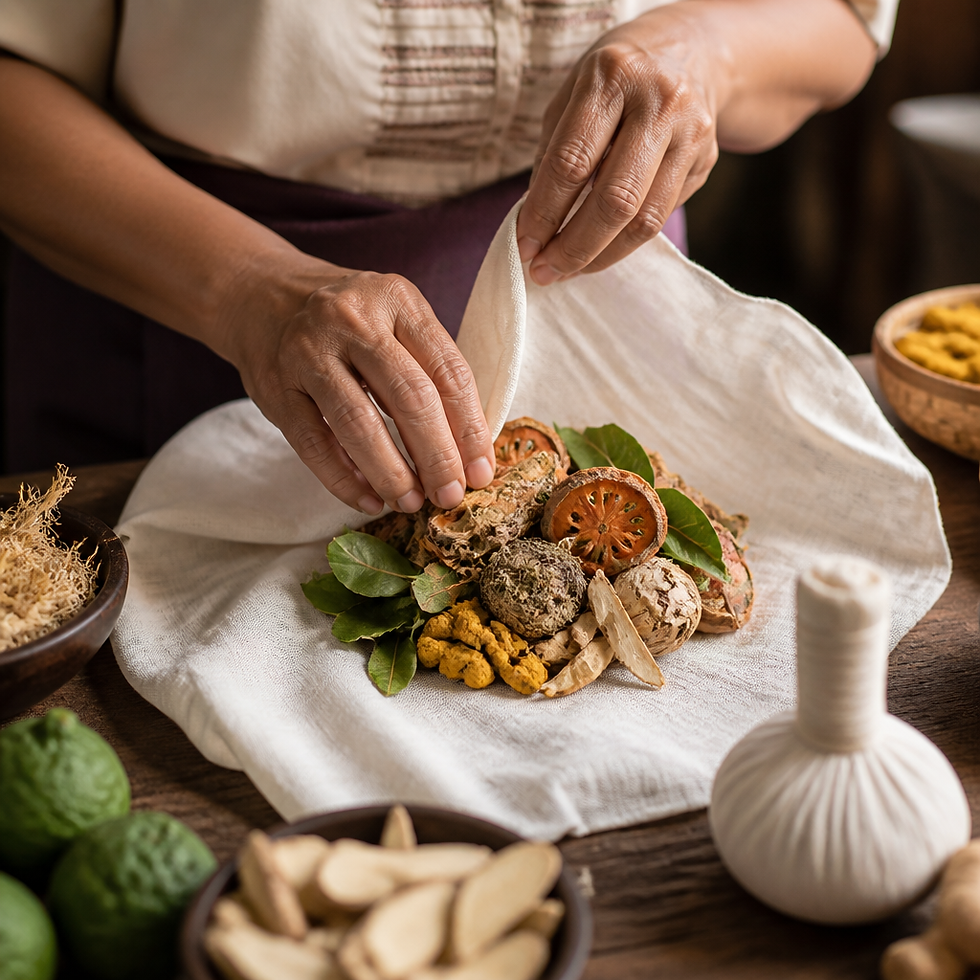
The herbal compress (Luk Pra Kob) is the treatment most travelers encounter, and for good reason. Wrapped bundles of aromatic herbs including lemongrass, turmeric, galangal, and kaffir lime are steamed and applied directly to the body. The Thai Ministry of Public Health, alongside the Department of Thai Traditional and Alternative Medicine Development, has formally documented its use as an anti-inflammatory agent, a local analgesic, and a muscle relaxant that improves range of motion and local circulation. When heat penetrates the skin, blood vessels dilate, and the essential oils from the herbs are absorbed through the pores. The aromatherapeutic dimension is not decoration; it is part of the mechanism.
But herbal medicine in TTM goes well beyond topical compresses. Internal herbal preparations are a major branch of the practice. These include decoctions, powders, and herbal balls taken orally for conditions ranging from digestive imbalances to respiratory issues. Each herb is classified not only by its plant family but by its action on the four elements. Some increase the fire element (useful for sluggish digestion or cold conditions), while others cool the wind element (useful for anxiety or erratic energy). A TTM herbalist selects herbs based on this elemental logic, which is why herbal prescriptions vary substantially from person to person even for similar complaints.
Common TTM Herbs and Their Elemental Functions
Turmeric (kha min) is classified primarily as a fire-increasing herb, used for its anti-inflammatory and circulatory properties. Prai root (Zingiber cassumunar) is central to muscle and joint treatments and appears in nearly every compress formula. Tamarind leaf and sweet sedge are common additions to steam preparations for their ability to open pores and support skin health. Plai, a relative of ginger native to Southeast Asia, is widely used in TTM for pain relief and has attracted attention from pharmacological researchers for its active compounds.
Pro tip: If you are visiting a TTM practitioner or herbal clinic, bring a brief health history. A practitioner who does not ask about your diet, sleep quality, or current complaints before recommending herbs is not practicing full TTM. They may be selling spa products instead.
Thai Herbal Steam Therapy: What to Expect
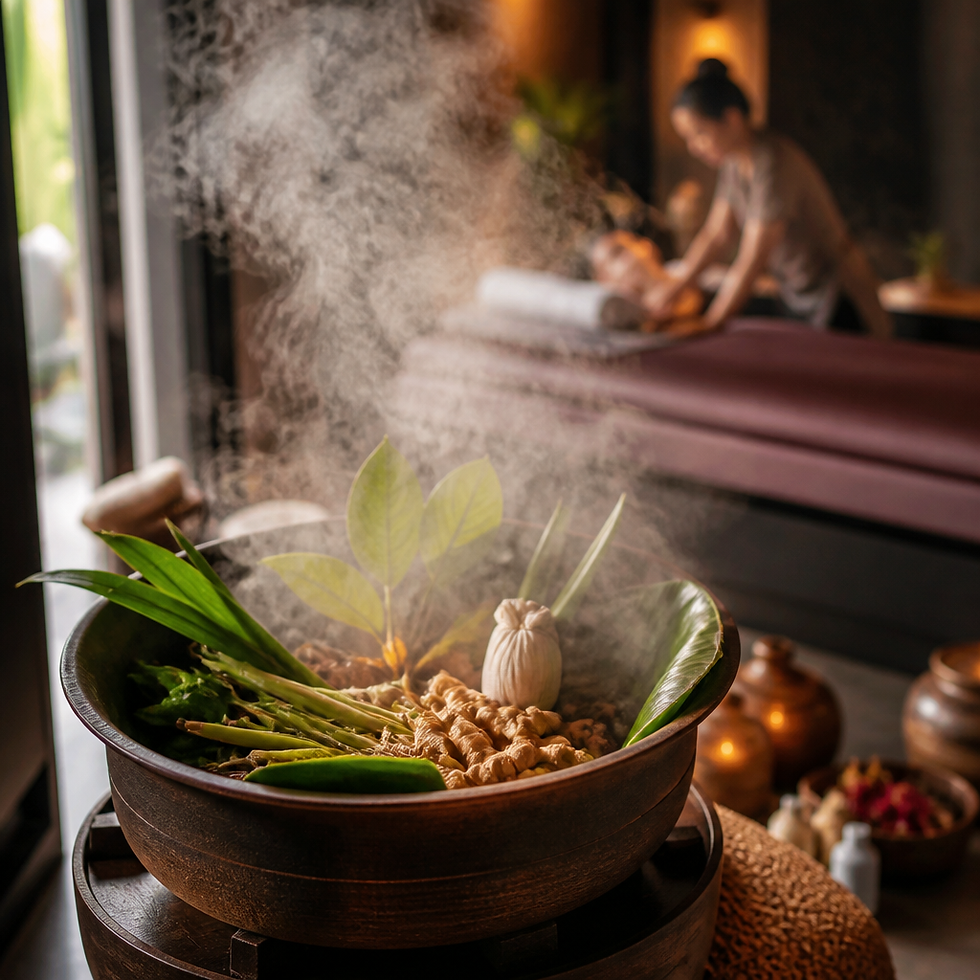
Thai herbal steam therapy is one of the most underrated treatments available in Thailand, and also one of the most misunderstood. It is not simply a sauna with herbs dropped in for fragrance. The steam is generated by boiling a specific blend of medicinal herbs, and that medicated steam is what the body absorbs during the session. The heat opens the pores, dilates capillaries, and allows the volatile compounds from the herbs to penetrate the skin. A well-designed herbal steam session addresses respiratory function, skin tone, muscle tension, and lymphatic circulation simultaneously.
Typical herbs used in TTM steam preparations include pomelo peel, som poi (Acacia concinna) leaves, sweet sedge, lemongrass, morning glory, kaffir lime, and salt. These are not random; each ingredient serves a functional role in the steam's therapeutic profile. Sessions generally run between 15 and 30 minutes. Longer is not always better, and reputable clinics will cap sessions to avoid overheating or dehydration.
Where Steam Therapy Is Most Commonly Available
Herbal steam baths are offered at traditional medicine clinics, wellness retreats, and some upscale spas across Thailand. Quality varies dramatically. The clearest indicator of an authentic steam treatment is a fresh herbal preparation made on-site, not a prepackaged sachet of dried leaves. Chiang Mai has a particularly strong tradition of herbal steam as part of broader Lanna healing protocols, where it is often paired with a traditional massage or compress treatment in a single session.
True herbal steam therapy works because the medicinal compounds in the herbs, released as volatile oils in the steam, are absorbed through the skin and respiratory tract simultaneously. Heat is the delivery mechanism, not the treatment itself.
Research published in peer-reviewed medical literature has explored TTM steam as part of integrative protocols, including a standardized seven-week program combining herbal steam, aromatherapy massage, and music therapy that was validated for use in community hospital settings. This is not fringe wellness; it is a systematized, clinically studied application of traditional knowledge.
Pro tip: Drink a large glass of water before your herbal steam session and arrange a cooling period afterward. Many clinics in Thailand offer an herbal compress or cooling herbal tea as a follow-up. Accept both; the transition from heat to rest is part of the therapy's intended arc.
Fire Therapy and Heat-Based Healing
Heat is a therapeutic principle woven throughout TTM, not just in steam. The practice known as yu fai, historically a postpartum fire retreat, demonstrates how central heat management is to traditional Thai healing. In the traditional protocol, a new mother would rest close to a fire or lie on a heated bed for an extended period after giving birth, often accompanied by herbal steam, hot salt compresses, and compress ball massage. The physiological goals were clear: improve blood circulation, support uterine contraction and involution, prevent postpartum infection, and stimulate breast milk production.
Some hospitals in Thailand still offer adapted versions of these postpartum protocols, combining traditional herbal applications with modern obstetric care. Beyond the postpartum context, heat-based treatments using salt compresses, warm herbal packs, and structured thermal exposure appear throughout TTM for musculoskeletal conditions and circulatory concerns.
Tok Sen: The Tapping Therapy of Northern Thailand
Tok Sen is a Lanna healing practice from northern Thailand that involves rhythmic tapping along the body's energy lines using a wooden wedge and mallet. The vibration penetrates deeper than hand pressure alone, making it useful for chronic muscle tension, nerve pathways, and areas where conventional massage cannot achieve sufficient depth. It looks alarming to first-time observers, but in the hands of a trained practitioner, it is precise and deeply effective. Tok Sen is concentrated in Chiang Mai and the northern provinces, where the Lanna healing tradition remains most intact. You will not find it easily in Bangkok's tourist spas.
Reusi Dat Ton and Other Physical Practices
Reusi Dat Ton is the self-care physical practice embedded in TTM, often described as Thailand's version of yoga or therapeutic stretching. The name translates roughly to "hermit's self-stretching exercise," and the poses are depicted in stone carvings at Wat Pho in Bangkok. Unlike yoga imported from India, Reusi Dat Ton was developed specifically alongside Thai massage practice as a way for massage therapists to maintain their own bodies and for patients to support treatment between sessions.
The postures address specific sen lines, the energy channels that Thai massage also works with. A practitioner who teaches Reusi Dat Ton alongside massage or herbal therapy is offering a genuinely integrated TTM protocol, where active self-care reinforces passive treatment. If a wellness retreat or clinic offers Reusi Dat Ton classes, that is a reliable signal of deeper TTM grounding, not just a spa menu with exotic vocabulary.
Meditation as a component of TTM is less structured than in some other traditional systems, but it is present. Buddhist-influenced mindfulness practices appear in TTM as psycho-spiritual support for physical treatment, particularly for conditions where emotional stress is understood as the elemental disruption driving physical symptoms.
Holistic Wellness Clinics in Thailand: How to Find the Real Ones
Thailand has no shortage of places selling wellness. The genuine holistic clinics, where TTM is practiced as a medical system rather than a spa aesthetic, are a smaller group. Knowing what to look for makes the difference between a transformative experience and an overpriced massage with a pot of herbs in the corner.
What Authentic TTM Clinics Actually Look Like
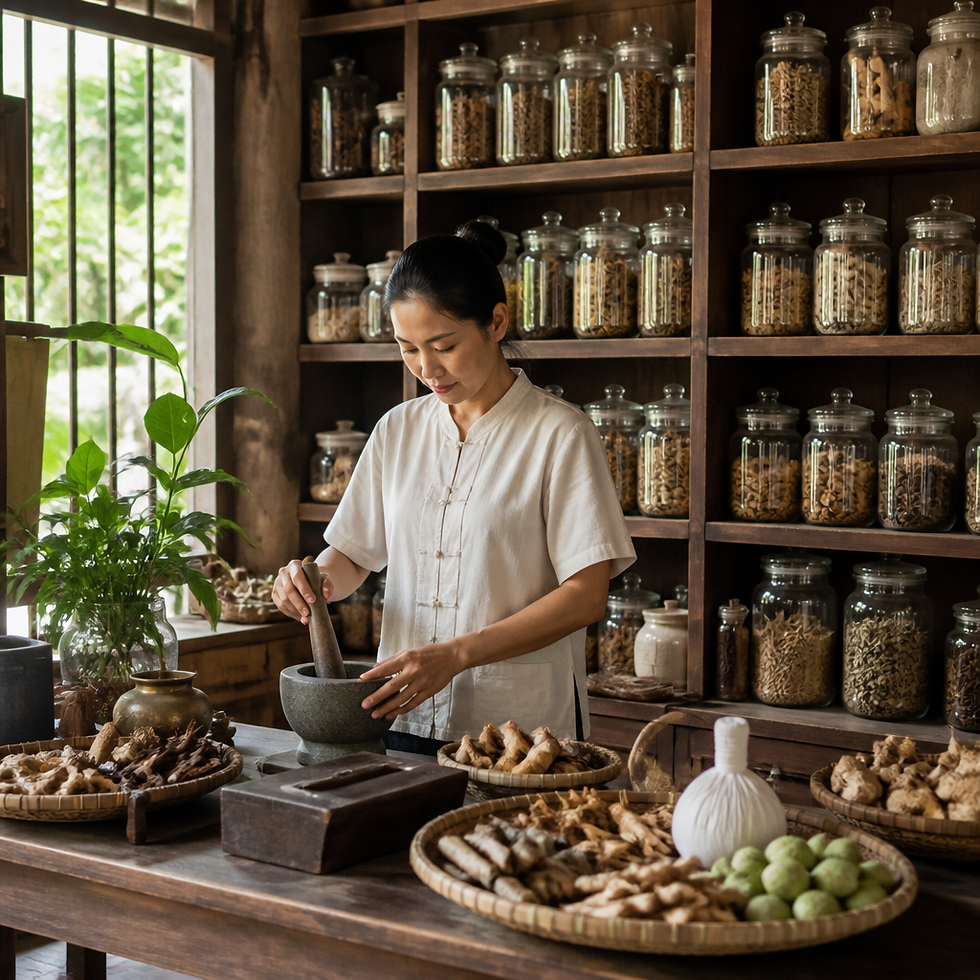
A legitimate TTM clinic will have practitioners who hold formal credentials from Thailand's Department of Thai Traditional and Alternative Medicine or from an accredited TTM training institution. The consultation process matters: before any treatment begins, a practitioner should ask about your health history, current conditions, diet, and constitution. Treatment is then selected based on that assessment, not from a laminated spa menu.
In Chiang Mai, the northern tradition of Lanna healing is woven into many local clinics, offering treatments like Tok Sen, herbal steam, and traditional massage as an integrated protocol. Chiang Mai has been recognized as a premier global destination for traditional health and wellness tourism, with its mountain environment and deep cultural roots supporting authentic practice.
Bangkok has developed a parallel but different offering. The capital now hosts a growing number of integrative clinics that combine TTM with modern diagnostic tools. These facilities are well-suited to travelers who want the cultural depth of traditional medicine with the reassurance of medical-grade oversight. The BDMS Wellness Clinic in Bangkok represents the kind of institutional scale that brings together traditional and modern medical professionals under one roof, though many smaller specialist clinics also operate throughout the city.
Red Flags to Watch For
Avoid any clinic that cannot explain the herbal composition of its treatments, that uses prepackaged steam sachets as a primary selling point, or that cannot tell you the credentials of its practitioners. A herbal steam that smells pleasant but uses no fresh or properly prepared herbs is delivering heat, not therapy. Similarly, a "TTM consultation" that takes less than five minutes and ends with a standardized treatment recommendation has not actually applied TTM diagnostic principles.
Comparison of Core TTM Treatment Types
Treatment | Primary Mechanism | Best For |
|---|---|---|
Luk Pra Kob (Herbal Compress) | Topical heat and herbal absorption through direct skin contact; anti-inflammatory and analgesic effects validated by Thai Ministry of Public Health | Muscle tension, joint pain, post-exercise recovery, chronic pain; pairs well with traditional massage |
Herbal Steam Bath | Medicated steam absorbed through skin pores and respiratory tract; dilates capillaries and delivers volatile herbal compounds systemically | Respiratory conditions, skin health, lymphatic support, full-body detoxification; also used in postpartum care and geriatric wellbeing programs |
Tok Sen (Tapping Therapy) | Rhythmic wooden mallet vibration along energy lines; penetrates deeper tissue layers than manual pressure | Chronic deep muscle tension, nerve-related discomfort, areas unresponsive to conventional massage; specialist Lanna technique, most available in Chiang Mai |
Frequently Asked Questions
Is Thai traditional medicine safe to try alongside conventional medical treatment?
For most herbal, steam, and compress treatments, TTM is considered safe for healthy adults and is unlikely to interfere with standard medical care. However, internal herbal preparations can interact with prescription medications, particularly blood thinners, anticoagulants, and immune-modulating drugs. If you are on any prescription medication, inform your TTM practitioner before taking any herbal preparation orally. External treatments like steam baths and compresses generally carry lower interaction risk, though heat-based therapies should be avoided by people with cardiovascular conditions, active skin infections, or pregnancy unless specifically cleared by a doctor.
How is TTM different from Ayurveda or Chinese traditional medicine?
All three systems share a holistic, elemental framework, but their specific theories, herb libraries, and treatment methods differ significantly. TTM uses a four-element model (earth, water, wind, fire) and a network of energy lines called sen, which differ in number and pathway from Chinese meridians. The herbs used in TTM are drawn from Southeast Asian botanicals, many of which do not appear in Chinese or Indian pharmacopoeias. TTM also integrates Buddhist philosophical concepts more directly than Ayurveda or TCM. A practitioner trained in one system is not automatically qualified in another.
What is the best city in Thailand to experience authentic TTM treatments?
Chiang Mai is the strongest choice for travelers who want depth in traditional healing, particularly for Lanna-specific practices like Tok Sen, mountain herb treatments, and community-based traditional clinics. Bangkok offers more integrative and medically supervised options, with clinics that combine TTM with modern diagnostics and laboratory testing. Phuket and Koh Samui have wellness retreats with good TTM offerings, though these tend to be more resort-oriented than clinically traditional. For a serious TTM experience rather than a wellness holiday, Chiang Mai or a dedicated TTM clinic in Bangkok is the more reliable choice.
How long should a Thai herbal steam session last?
Fifteen to twenty minutes is the standard therapeutic window for an herbal steam session. Some clinics offer up to thirty minutes as a maximum. Sessions beyond that threshold increase the risk of dehydration, overheating, and skin irritation without proportional therapeutic benefit. If a clinic is pushing longer sessions as a premium upsell, that is a sign of commercial rather than clinical thinking. Post-steam rest in a cool space for at least ten minutes is an important part of the protocol, not optional.
Can I experience TTM treatments if I have never had Thai massage before?
Yes, and in some ways TTM's herbal and steam treatments are a gentler entry point than traditional massage. Herbal steam, compress therapy, and Reusi Dat Ton classes require no prior experience and involve no physical manipulation by a therapist. They are also excellent complements to a first Thai massage session. If you are new to the entire TTM spectrum, starting with a herbal steam followed by a traditional massage with compress finish gives you a good cross-section of what the system offers without overwhelming your body on day one.
How do I know if an herbal product sold in Thailand is genuinely from the TTM tradition?
Look for products registered with the Thai Food and Drug Administration (Thai FDA) and those that carry a TTM certification mark. Genuine TTM herbal products will list Thai botanical names alongside common names, include preparation instructions that reflect traditional use, and be sold by licensed herbal medicine practitioners or registered pharmacies. Products sold purely as souvenirs or tourist-market items often contain lower concentrations of active herbs and may not be formulated according to any traditional prescription. Buying from a clinic or licensed pharmacy rather than a market stall is the most reliable safeguard.
We would love to hear about your experience with Thai traditional medicine treatments. Have you tried herbal steam therapy, Tok Sen, or a full holistic clinic consultation during your time in Thailand? Share what surprised you most in the comments below.


Comments