

Wat Pho Massage School: What to Know Before You Visit

Most visitors to Bangkok's Wat Pho temple spend their time photographing the 46-metre Reclining Buddha and move on. They walk right past one of the most historically significant wellness institutions in Southeast Asia: the Wat Pho massage school, formally known as the Wat Pho Thai Traditional Medical and Massage School. If you are planning a wellness-focused trip to Bangkok, understanding what this school actually is, what it offers, and how to navigate a visit will save you confusion, money, and wasted time at the gate.
Table of Contents
Quick Takeaways
Key Insight | Explanation |
|---|---|
The school opened in 1955 | It was the first massage school approved by the Thai Ministry of Education, and it remains the most respected in the country. |
There are two distinct locations | The original pavilion is inside the Wat Pho temple complex. The dedicated school branch (near Tha Tien) operates separately with full course facilities. |
No booking for walk-in treatments | The temple massage pavilion operates on a walk-in, numbered-ticket basis. Arrive early to avoid long waits, especially on weekends and public holidays. |
Treatments require temple admission | To receive a massage inside the temple complex, you must first pay the temple entry fee. Factor this into your budget. |
The foundation course suits travellers | The 5-day General Thai Massage course requires no prior experience. It is the natural starting point for wellness travellers wanting a certified credential. |
Nuad Thai is UNESCO-listed | Traditional Thai massage was inscribed on the UNESCO Intangible Cultural Heritage list in 2019. Wat Pho's stone inscriptions are part of a UNESCO Memory of the World register. |
The knowledge is carved in stone | Over 1,400 stone inscriptions at Wat Pho document traditional Thai medicine, massage techniques, and pressure points, commissioned by King Rama III in 1832. |
History and Significance of Wat Pho Massage School
The story of this school does not start in 1955. It starts in 1832. Under the reign of King Rama III, Wat Pho became Thailand's first center for public education, and over 1,400 stone tablets were inscribed with knowledge covering traditional medicine, massage techniques, herbal pharmacology, and anatomy. These inscriptions, which you can still view throughout the temple grounds today, form the documented foundation of Thai massage as a formalized practice. They were later registered as a UNESCO Memory of the World.
King Rama III also ordered the creation of the school after concerns were raised that the tradition of Thai massage was in danger of being lost. The formal institutional chapter began when the Wat Pho Thai Traditional Medical and Massage School was officially established in 1955 as the first massage school approved by the Thai Ministry of Education.
Traditional Thai massage itself traces its philosophical roots back further still, to Ayurvedic principles and Buddhist teachings. Its legendary founding father, Jivaka, is regarded as the physician to the Buddha. The practice reached Siam through Buddhist monks and developed over centuries in temple settings, where monasteries served simultaneously as schools, hospitals, and pharmacies. In 2019, Nuad Thai was officially inscribed on the UNESCO Intangible Cultural Heritage list, cementing the global standing of a practice that Wat Pho has been teaching and preserving for generations.
Wat Pho is not merely a place to receive a massage. It is the institution where Thai massage was codified, preserved, and taught to the world. That context changes every treatment you receive there.
For wellness travellers, this history is not background noise. It is the reason a massage at Wat Pho carries a weight that no street-side massage shop can replicate. When a therapist trained here works along your sen energy lines, they are applying a method documented in stone nearly two centuries ago and refined through institutionalized teaching ever since.


Two Locations: Temple Pavilion vs. the School Branch
One of the most common sources of confusion among first-time visitors is that "Wat Pho massage school" actually refers to two distinct places. Getting clear on the difference before you arrive will prevent disappointment.
The Temple Massage Pavilion
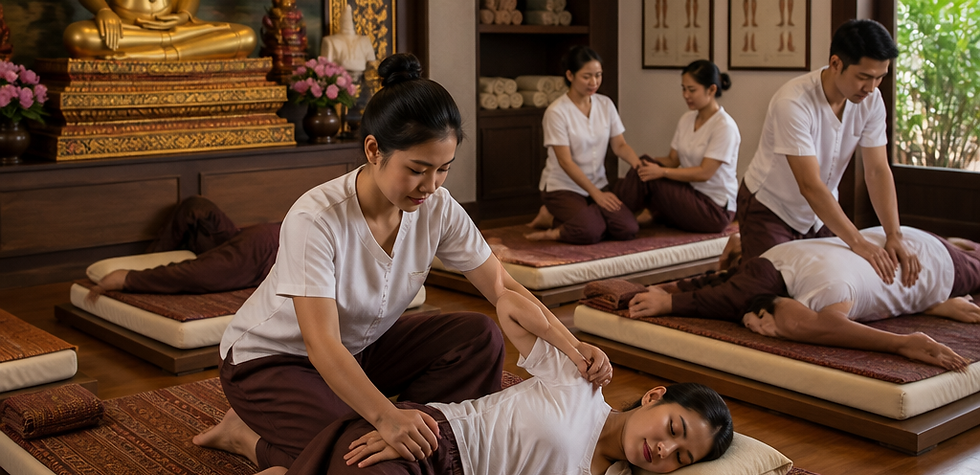
Inside the Wat Pho temple complex itself, there is a massage pavilion where visitors can receive treatments from therapists trained at the school. This is where most tourists end up. It operates on a walk-in, numbered-ticket system. You cannot pre-book in advance. The open-plan setting means you will be lying on a mat alongside other visitors, with no privacy partitions. If you are after a quiet, private spa environment, this is not it. What it offers instead is authenticity, affordability, and direct access to the institution's living tradition.
The School Branch Near Tha Tien
The dedicated teaching and treatment branch, sometimes referenced as the Tha Tien location, is located just outside the temple complex in a small street between Wat Pho and the Chao Phraya River. This branch has proper treatment rooms (including private rooms on upper floors), a wider menu of services including oil massage, and the classroom facilities used for enrolled students. Some travellers who return to Bangkok specifically for longer massage sessions prefer this branch for the added privacy. It operates daily and keeps hours roughly aligned with the temple.
Pro tip: If privacy matters to you, head to the school's Tha Tien branch rather than the open pavilion inside the temple. The quality of the therapists is comparable, and you get a more controlled environment without the open-hall atmosphere.
Courses Offered: What You Can Learn
The school teaches structured, certified courses across several disciplines. No prior experience is needed for the foundation course, and international travellers make up a significant share of each class. Courses are offered with English-language instruction, though it is worth confirming English availability ahead of your intended start date, as session sizes and language options can vary.
The General Thai Massage Foundation Course
This is the flagship offering. It runs approximately five days covering roughly 30 hours of instruction and hands-on practice. Students work in pairs of similar size and weight, practising on each other throughout. The course ends with a completion certificate recognized across the industry. This is the right starting point for wellness travellers who want a genuine credential, not just a short taster session. Course fees have been cited by recent visitors at roughly 9,500 to 12,000 THB, though you should always confirm current pricing directly with the school, as fees are updated periodically.
Foot Massage and Reflexology
A shorter module, typically two to three days, focused on reflexology and foot massage technique. This is a popular addition for travellers who have already completed the general course or who have a professional interest in this specific modality.
Advanced and Specialist Courses
Once you have completed the foundation, the school offers more advanced modules including an Advanced Thai Medical Massage course (approximately 10 days), oil massage, infant and child massage, and anti-cellulite techniques. The longer professional courses, lasting several weeks, include course materials and sometimes accommodation, making them viable for those who plan to pursue Thai massage as a career. The most intensive professional certification courses run to over 150 hours of training.
Pro tip: Bring your passport and passport photos when enrolling for any course. The school's registration process requires identification documentation. Do not skip this step or assume you can sort it after you arrive.
Getting a Massage Treatment Without Taking a Course
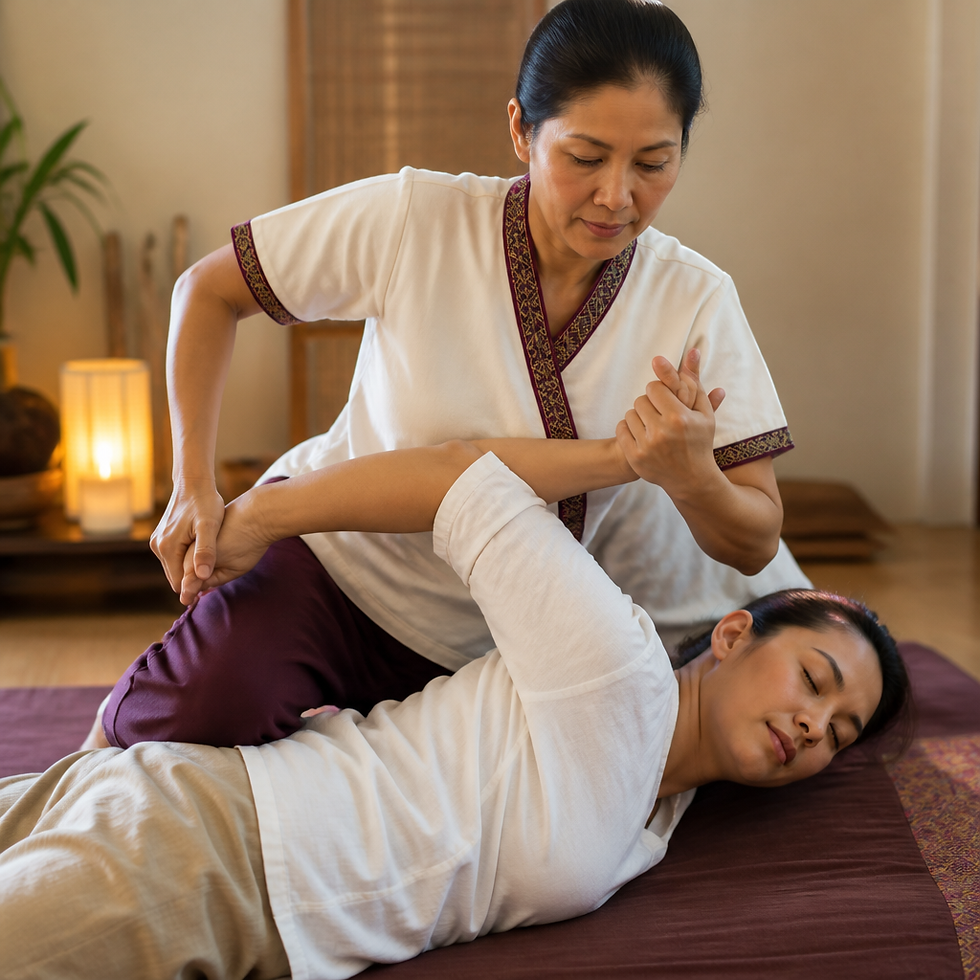
You do not need to enroll in a course to benefit from the school's expertise. The treatment-only option is what most visitors choose, and it is a genuinely excellent value for a first encounter with traditional Thai massage in its most authentic setting.
Treatment Options and Approximate Pricing
The temple pavilion and the Tha Tien branch both offer Thai massage and foot massage at accessible price points. Pricing for a 30-minute session inside the temple has been reported by recent visitors at around 260 to 320 THB, with one-hour sessions priced higher. The school's own Tha Tien branch, being just outside the complex, has slightly different pricing. For treatments like oil massage at the branch, recent visitor accounts put two-person sessions (two hours) at approximately 3,400 THB. As always, treat these figures as a general guide rather than guaranteed current prices, and check the posted rate board on arrival.
Walk-In Only, No Reservations
This is the detail that catches the most visitors off guard. The temple massage pavilion does not accept advance bookings. You show up, take a numbered ticket, and wait your turn. On busy days, particularly weekends, Thai public holidays, and peak tourist season from November through February, waiting times can extend significantly. Arriving by 9:00 AM is the most reliable way to get seen quickly without a long wait.
What to Expect Inside the Treatment Area
You will be given loose-fitting pants to change into. The treatment takes place on a mat in an open hall with other visitors alongside you. Therapists do not typically engage in extended conversation during the session. The style is firm, stretching-focused, and works along the body's sen energy lines. If you bruise easily or have joint injuries, mention this before the session begins. Tipping is appreciated; rounding up or adding around 50 to 100 THB is a reasonable and respectful gesture.
Comparing Your Options at Wat Pho
Option | Best For | Key Consideration |
|---|---|---|
Temple Pavilion Walk-In Treatment | Visitors wanting an authentic, affordable taste of traditional Thai massage in the heart of the institution | Open-plan setting with no privacy; walk-in queue only; temple admission fee applies |
Tha Tien School Branch Treatment | Returning visitors or those wanting more privacy and a wider treatment menu including oil massage | No temple admission needed; private rooms available on upper floors; slightly higher price range |
5-Day Foundation Course | Wellness travellers wanting a certified credential and hands-on skills to carry home | Requires approximately one week commitment; English sessions should be confirmed in advance; costs roughly 9,500 to 12,000 THB |
Practical Visit Tips: Getting There, Hours, and Etiquette
How to Get There
Wat Pho is located in Bangkok's Phra Nakhon District, directly south of the Grand Palace. The most straightforward public transport option is the MRT Blue Line to Sanam Chai Station (Exit 1), followed by approximately a five-minute walk. Alternatively, take the Chao Phraya Express Boat and disembark at Tha Tien Pier, also about a five-minute walk to the temple's northern entrance. If you are already visiting the Grand Palace or Wat Phrakaew, Wat Pho is a short walk away, making it easy to combine both into one day.
Opening Hours
The temple complex opens daily from 8:00 AM. The massage pavilion inside the temple and the school branch near Tha Tien both operate during daytime hours. Hours listed by multiple sources range from roughly 8:00 AM to 5:30 PM for the school branch and up to 8:00 PM for some temple services, though hours can change. Always verify current times before planning around a late-afternoon visit.
Admission and Dress Code
Foreign visitors to the Wat Pho temple complex pay an entrance fee. From 2024 onward the fee has been reported at 300 THB per person. This fee is separate from any massage payment. Dress modestly for the temple: shoulders and knees should be covered. If you arrive in shorts or a tank top, cover-ups are available for loan at the entrance. Remove your shoes before entering temple buildings.
Timing Your Visit Wisely
The period from November through February is Bangkok's high season, when tourist numbers at Wat Pho are at their peak. Weekday mornings are consistently the least crowded time for both sightseeing and the massage pavilion. If you plan to visit during a Thai public holiday, expect significantly longer waits and consider prioritizing the Tha Tien school branch instead, where you may have more flexibility.
Frequently Asked Questions
Do I need to book a massage at Wat Pho in advance?
No. The massage pavilion inside the temple complex operates exclusively on a walk-in, numbered-ticket basis. There is no online or phone booking system for walk-in treatments. If you want to enrol in a course, that does require advance contact with the school to confirm dates, English-language instruction availability, and registration requirements.
Is Wat Pho massage school suitable for complete beginners?
Yes. The foundation course, the 5-day General Thai Massage module, is designed for people with no prior training. Students practice on each other under instructor guidance throughout the course. The school pairs students of similar size and height to make practice sessions more effective.
How does the Wat Pho massage school compare to other Bangkok massage schools?
No other institution in Thailand carries the same historical weight or official recognition. The school was the first approved by the Thai Ministry of Education, and its connection to the 1832 stone inscriptions and the broader UNESCO-recognized tradition of Nuad Thai places it in a category of its own. Other schools in Bangkok offer legitimate training, but they cannot replicate the institutional lineage that Wat Pho represents.
Can I get a Thai massage at Wat Pho without paying the temple entrance fee?
Yes, but only if you use the school's dedicated branch near Tha Tien, which is located just outside the temple complex. That branch operates independently and does not require a temple admission ticket. If you want a treatment inside the temple pavilion itself, the entry fee applies.
What should I wear to a Thai massage session at Wat Pho?
Comfortable, loose-fitting clothing is ideal. The school provides loose pants for the treatment session, but wearing something easy to change into and out of makes the process smoother. For the temple visit more broadly, shoulders and knees must be covered. Avoid tight jeans, short skirts, or sleeveless tops, or bring a light layer to comply with the dress code.
How long does a typical Wat Pho massage session last, and is 30 minutes enough?
Sessions are offered in 30-minute and 60-minute increments, with some branches offering longer sessions for oil massage. Most visitors who have done both report that 30 minutes feels rushed, especially if you are unfamiliar with traditional Thai massage and want to fully appreciate the technique. A 60-minute session gives the therapist time to work the full sequence properly and gives you time to settle into the treatment.
Is the Reclining Buddha visit combined with the massage a worthwhile day plan?
Absolutely, and it is one of the most coherent wellness day trips you can plan in Bangkok. Start with the temple in the morning when it is cooler and less crowded, spend time reading the stone inscriptions (they are genuinely fascinating context for the massage tradition), then take a massage session before leaving. The two experiences reinforce each other in a way that makes the day feel genuinely educational rather than just tourist box-ticking.
Have you visited Wat Pho for a massage treatment or taken a course there? Share your experience or questions in the comments below.
References
Official Thailand 2026 Tourism guide to Wat Pho: history, inscriptions, and visitor information
Wat Pho as the sacred home of traditional Thai massage: school history and heritage context
Wat Pho Thai Traditional Massage School: location details, opening hours, and course overview
Wat Pho massage school courses, treatments, and pricing guide for visitors
History of Thai massage from Ayurvedic roots to UNESCO recognition and the Wat Pho school


Comments